A Turning Point
Rat-a-tat-tat; rat-a-tat-tat, the Sten gun bucked in my hands as I saw the bullets strike home and the sand kicked up on the banking. “Bain!”, the corporal’s voice barked out behind me. Just as I began to turn he barked again, “Keep facing front, engage the safety catch and put down your weapon!”.
I was on the firing range at the Royal Army Pays Corps camp in Devizes, Wiltshire. I had arrived three weeks ago to begin my basic training as a short-term regular in the army; an alternative to doing my two years compulsory National Service. It was a pleasant early September day in 1953 and I had left school a few weeks earlier.
“Pick up your small pack at the barracks and report to the medical officer immediately, Bain” he said. “What’s it all about Corp?” I asked. “Damned if I know.”, he replied.
I handed him my Sten gun, returned to barracks to pack and made my way to the MO’s office. On checking in there I was told that they had found something on the x-rays which had been taken a week earlier, when a mobile unit came to the camp and anyone who had not had an x-ray during their signing-on process was to have one. “We are sending you to Tidworth to be checked over,” the MO said, “An ambulance is waiting outside”. (Tidworth was the hospital not far away.)
On arriving at Tidworth I was shown to a ward and ordered to strip and get into the bed provided, which I did, and laid there wondering what was happening to me but not overly concerned. After all I felt fit and well and was sure that I would soon be back in barracks. My main worry was that if it was more than a couple of days they might drop me from my current intake and all my mates and start me afresh with a new intake.
Eventually a medical officer arrived and explained that my x-ray had displayed some ‘shadows’ on my lungs and this could indicate some problems that they wished to investigate further. This was likely to involve further x-rays and some blood tests and they should have a clearer picture within a week. My heart sank at that since it would almost certainly mean I would be moved to a fresh intake.
The rest of my time at Tidworth was mostly uneventful other than undergoing several blood tests, answering many questions from medical staff, and having more x-rays. One incident I do remember with some embarrassment. One morning the nurse came to ask for my pyjamas (hospital issue) for laundering which I awkwardly provided by stripping under the bed covers. Off she went all sweetness and innocence, but without providing me with a clean set which she assured me would be distributed shortly. A few minutes later two nurses arrived to change my bed linen! I should explain that I was supposed to stay in bed, but that presented no problem to the nurses since they are skilled at changing bed clothes while the patient remains in the bed. My problem was that I had no pyjamas on and for an 18 year old lad confronted by two attractive young nurses that was not a situation to be relished; at least not in those circumstances. The crafty blighters had concocted the whole charade to embarrass me and check out my credentials! They eventually completed the process and went off smiling, no doubt to report the jape to their colleagues, and shortly after the first nurse returned with my clean pyjamas and a knowing smile. It was my first experience of the sense of humour of nurses, but it was not to be my last!
Towards the end of two weeks I had a visit from the medical officer with news of the findings from their various tests. I had pulmonary tuberculosis at a relatively advanced stage and I was to be transferred to the special military hospital at Hindhead, Surrey. But what about my basic training at Devizes and when would I be returning? “You can forget that laddie; your days in the army are over! Your personal belongings will be sent on from Devizes.” Suddenly the seriousness of the whole situation began to hit me: What about my plans to take my Customs and Excise exams at the end of my army term? What was I to do when I was discharged from the army? What were Mum and Dad going to think about all this and how could they visit me in Hindhead all the way from Great Yarmouth? How long was I going to be at Hindhead? My carefully plotted plans to become a Customs Officer had run into a serious problem, but it was not until later that I was to discover how serious.
Hindhead was going to be my home for the next few weeks and my treatment for tuberculosis began in earnest. It was a military hospital spread over a wide area in the form of low, single storey barrack-like buildings. The ward I was placed in had a mixture of soldiers with a variety of problems. Some had returned from the Korean War where they had seen tough action and suffered from nightmares as a result. It was not unusual to be woken in the night by a loud cry and, often, sobbing.
My treatment consisted of bed-rest and medication. The medicine was a combination of PAS and INH. One was a foul-tasting liquid and the other a large capsule which was very difficult to swallow. I had no idea what those initials stood for other than some chemical compound. I have since learned that INH is isozianid while PAS is para-aminosalicylic acid, but that makes me only a little wiser…
I also had to have a sputum mug by my bed and try to spit into it whenever I could so that they could test for infection. Once a week I also had a sample taken from my stomach which involved either swallowing, or passing via my nose, a thin rubber tube so that they could siphon out some of my gastric fluids. Not very pleasant but I soon learned the best technique to avoid gagging!
While I was at Hindhead the girl I had been going out with before I joined the army, and who wrote to me from time to time, decided there was not much future for our relationship and sent me a ‘Dear John’ letter. (That was what people called any letter that one received where the relationship was being ended). It came as no surprise and although it upset me at the time I couldn’t blame her. It wasn’t as if we had a long-term serious relationship.
My time at Hindhead was fairly uneventful but we had some funny experiences. We used to be given a bottle of stout or Guinness every evening as it was thought to provide iron in a palatable way! One old veteran in the ward used to horde his (against the rules) and also cadged any spare that others didn’t drink. Then at the week-end he would drink the lot and get thoroughly drunk and end up singing old songs and generally larking about.
I also had a real surprise when two old schoolmates turned up to visit, having hitch-hiked all the way from Great Yarmouth. It was really good to see them and to realise I had not been forgotten. Mum and Dad managed to get down a couple of times but it was not easy for them as they had to run the cafe that we had in Yarmouth.
You might wonder how we passed the time in bed 24 hours a day. It was at this time that I started my various handicraft hobbies. I did a bit of tapestry and also tried my hand at leatherwork. It passed the time and also produced a few things that were useful (a pair of kid driving gloves, for example).
By the end of November the powers that be decided that I should be transferred to somewhere closer to my home since I was never to return to army duty. So it was that early in December I was told that I would be moving to a civilian sanatorium at Kelling in North Norfolk. This was a hospital especially for patients with tuberculosis although they later started to take in patients with cancer if they were in need of chest surgery. Although Kelling was still quite a way from my home it was a lot nearer than Hindhead and my parents could get up and back within the day (there was a special coach that came at week-ends).
My transfer was quite a performance and I will take some time to describe it in more detail. On the due day I was wheeled out to a waiting ambulance and travelled up to Liverpool Street Station in London accompanied by TWO MILITARY POLICEMEN! I never knew whether they were there to make sure I didn’t run off or to protect me from the public — probably a bit of both.
When we arrived at the station I was wheeled along the platform and was shocked to see that a whole railway carriage (not just a compartment) was reserved for me and on every compartment were stickers proclaiming that the public were excluded and that ‘this person has an infectious disease’. They were taking no chances of some innocent passenger coming in contact with me!
The train duly set off on the journey and when we arrived at Norwich (where we would normally have to change to get a connection to Holt, the nearest station to Kelling) our whole carriage was disconnected from the train and shunted into a siding outside the platforms. By this time it was late afternoon and dark, it being nearly mid-winter. We sat in the compartment, my two MPs and me, and were getting colder and colder. There was no heating since we were not connected to any engine and this was a very cold winter evening. After at least an hour the MPs started to get restless and wondering what was happening since we had had no contact from anyone. One of them decided to get down from the carriage and walk up to the platforms to see if he could get some information. He eventually returned to inform us that the station staff had totally forgotten us and they were now hustling about arranging for us to be hooked up to the next train to Holt!
We finally continued our journey and after transferring to an ambulance at Holt we arrived at Kelling Sanatorium in the late evening. I was wheeled into a strange wooden building with open verandas on each side and split into small two-bedded cubicles. I got to bed and was given some warm food and a drink and told I would see the doctor in the morning and to get some sleep.
So began my stay at Kelling and the beginning of a totally different path to my life as a Customs Officer that I had envisaged when I joined the army six months earlier. Before I continue with that story I will go back to the early years to describe how I arrived at that choice of career in the first place.
Family Background & Early Years
My father was William John Bain, born in Poplar, East London in 1905 and my mother was Amelia Caroline (née Brown), born in Bow, East London in 1908. My granddad Walter Bain had been a stevedore (similar to a docker but actually loading on board the ship not on the dockside). He became unable to work due to arthritis just before I was born and Dad ‘inherited’ his stevedore’s ticket which was highly valued at the time. Nan, Hannah Bain (née Hall), was a lovely lady and used to have the family round for Sunday lunches and times like Christmas. I never knew Gran and Granddad Brown (my mum’s parents) because they had both died when my Mum was quite young — Gran when my Mum was only 8 (I think) and Granddad (who had been a cooper which is someone who makes barrels) when she was only about 14.
Dad had one sister, Ethel, and four brothers Walter Robert (Bob), Henry, Frederick and George. My Mum had three older brothers, Albert, George and Robert (Bob). So I had two Uncle Bobs and two Uncle Georges! Uncle Albert was a musician in the army and when he left he joined a dance band where he met his wife-to-be. They apparently went to work and live in the USA and I never saw either of them. The other uncles and aunts were a regular part of my life until I had left school, after which I would see them less often.
Dad’s brothers all lived and worked in London so I would get to see them while at my Nan’s house. In fact Uncles Henry and George never married and lived with Nan until she died. Aunt Ethel was the eldest of his siblings and married Osbert Old. They had two sons, Alfie and Eddie, and lived out at Dagenham or Becontree which is not far to the east of London in Essex. Next in line was Walter, known by his second name, Bob. He married Aunt Lizzie and had a large family of girls; Edith, Marjorie, Annie and Betty (all born by 1932) until the late arrival of his only son Robert in 1942.
Mum’s brother George was a sergeant in the Black Watch Regiment, but left the army when he married Aunt Ruby. She worked for a family who owned a furniture business. Uncle George joined their business in Newcastle and, in fact, their big store in the centre of Newcastle traded as G.M. Brown (my uncle’s name). They had a son Stuart who was a few years younger than me. Mum’s other brother Bob never married and was in the Royal Navy so was only around occasionally. He retired as a Chief Petty Officer just before the outbreak of war in 1939.
By the time I came along my parents were living in the same street in which Dad had been born and where Granddad and Nan still lived, namely Cotton Street, Poplar. I was born at number 19 on 13th February 1935 and within a month I was christened at All Saints Church, Poplar. I had an older brother Ronald (Ron) who was over 5 years older having been born on 13th October 1929. I have no memories of that time and soon after I was born we moved further east to Custom House because that was nearer the ‘Royal’ docks where Dad was to work. We lived in a small terraced house on Leyes Road and my earliest memories are of riding my little three-wheeler trike along the street with my friend Bertie (Bristow, I think). It was safe to be out on the streets then because there were very few cars and the fastest vehicle you were likely to see was the horse and cart!
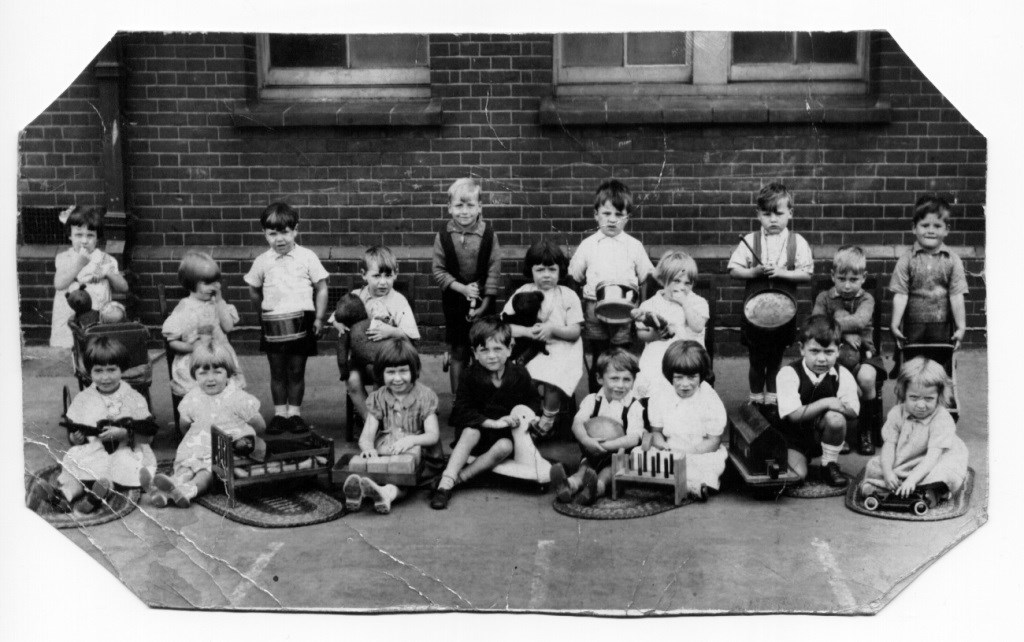
I have only vague memories of other events before 1939. I have a memory of being held by my father and waving a flag as an important cortege drove by near to where we lived. I think it was a visit by the new King George VI and Queen Elizabeth (not the present Queen but her mother). More importantly I remember visiting Dad in hospital and seeing him with bandages and tubes sticking out of him. I should say some more about this period of my life, but as my memories are vague I am going to quote from my brother Ron’s own story of his memories of that time.
“My Nan and Granddad used to live just across the road from us at 24 Cotton St and Saturdays were always the day when all the relations gathered. That was also when we received our Saturday ‘penny’. Near where we lived in Cotton St was a road which on a Saturday would be lined with stalls selling all types of goods, yes a good old market; Chrisp Street was its name. Well, one day we were looking round the market — Mum, Bill and me — when it was noticed that Bill was no longer with us. Big panic, we searched for him high and low. Eventually we found him, there he was sitting on the kerb-side playing with his toy car and he didn’t even know he was lost. Big sigh of relief.
“My brother Bill wouldn’t have been very old when we moved to Abbott Rd, but my memory of this period is very dim. I should mention that whilst we lived at Poplar my father had an extra part-time job working at a theatre called the Queen’s. I remember he used to wear a crimson uniform. As a result of this we used to get free tickets to various shows and saw all sorts of acts on the stage, and of course at Christmas times our Nan would take us up the ‘West End’ to see the pantomime. I reckon Bill was about 2½ years old and I would have been about 7½ when we moved to 74 Leyes Rd, Custom House. I attended Prince Regent Lane Junior School which was just at the end of our road. I can clearly remember one boy’s name was Peter Amos because he was first on the register and I was second. We had 4 school teams: Nelson, Drake, Clive and Wellington. I was in Wellington which was blue, and blue has always been my favourite colour ever since.” (I later went to the same school, and perhaps I was in Wellington because blue is also my favourite colour).
“My father was a stevedore and worked on the docks which were nearby. I think it was around Christmas 1938 that my father became seriously ill with double pneumonia and an abscess on the lung. He was rushed to Whipps Cross Hospital. Two things stick in my mind at this time. Firstly, the children in the street were trying to convince my brother that there was no Father Christmas and that it was my dad. It couldn’t be, Bill argued, because he had received all these Christmas presents and yet our dad was ill in hospital. There rests his case.
“Before I mention the second incident I ought to tell you that my mother’s brother, Uncle Bob, was in the Royal Navy as a Chief Petty Officer at this time. Mind you, as a little boy when I used to see him in his uniform I used to think he was nothing short of ‘Admiral’. Anyway, what happened was Uncle Bob sent us a great big Christmas hamper. It had everything in it that you would ever want for Christmas. What I couldn’t understand was that with all these wonderful things my mother was in tears. ‘Why are you crying Mum?’ says I. And of course it was because our Dad wasn’t there to share all the goodies. Anyway Mum gathered up all the perishables that we could carry and off we went on the bus to Nan’s house. There was some wonder pill called M&B tablets and it was these that helped my father make a good recovery. (I vaguely remember the arrival of this hamper).
“To the rear of our house were allotments and then there was this little river called River Connaught, which had a path down one side and a grassy strip on the other side. We would ask our parents to pack us up some food and also raw potatoes and we would all set off to this river and set up camp. We would get a camp fire going and cook our potatoes in the embers. There was no such thing as tin foil so the potatoes went straight in, but they would taste delicious even if they were eaten half cooked sometimes. Having set off on our camping expedition at about 9.30 in the morning, by the time it got to 1.00 pm we would be off ready for home having eaten all our food and asking our mothers if it was time for dinner.
“Another adventure, if you could call it that, was to go fishing for tiddlers. These were either sticklebacks or red throats, both about 1” to 2” long (2-5cm). When you were lucky enough to catch a fish you put it in a jam jar.
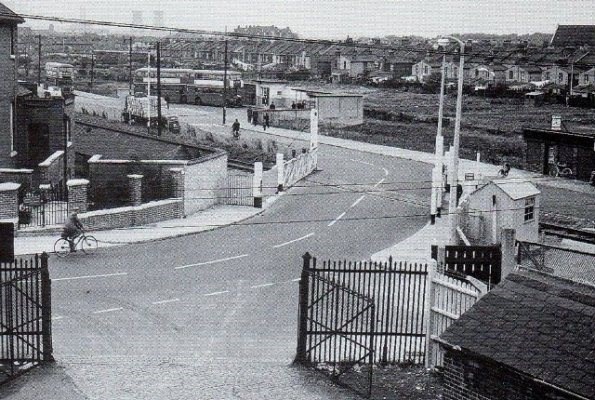
“Further excitement could be had by either walking, or better still, catching a train to Woolwich. I remember a time when I was at some railway platform and, as all us lads used to do, I tried the chocolate machines to see if by some fluke a bar of chocolate would come out. Well, on this occasion I tried the machine as usual and lo and behold it coughed up a bar of chocolate. I kept trying it and ended up with about six bars of Cadbury’s Chocolate. Having arrived at Woolwich the idea was to go on the ‘free’ ferry across the River Thames to the south side and to return via the foot tunnel. We would do this as many times as we could until one of the men on the ship would notice that we had been on a few times. In fact there were two ferries plying back and forth all day long, so we would get a good run for our ‘money’. Did I say money? It didn’t cost us a penny. Whilst we were on the south side of the river Thames we would sometimes go to Abbey Woods or it might have been Bostall Woods and at the right time of year, pick blue bells and sell them for 1d (one old penny) a bunch. Such enterprise!
“Near where we lived was the trolley bus terminus and it was possible, especially during school holidays to get a sixpenny (6d) ‘all-day-ticket’. Like it says, with this ticket you could go anywhere you liked on any trolley bus. I also used to like going, as a family, to our local speedway and watch these motor cycles racing round the track. Our team was West Ham, ‘The Hammers’. Of course, as children we used to copy them on our bikes. Near where I lived was an unmade road and this became our dirt track. Four times round the circuit (anti-clockwise) skidding into the bends. My bike was a small one with 22” wheels but I could go round like a bomb. (This reminds me that I used to race my friend Bertie on our trikes; I was ‘Bluey’ Wilkinson and he was ‘Tiger’ Stephenson, who both rode for the Hammers.)
“I used to see my cousins on various occasions throughout the year, but always the most vivid memories were at Christmas time. The usual system would be for us to open all our Christmas presents at home and then select our favourite, or ones that would travel easy, and on Christmas morning off we went to Nan’s, which was about 5 miles away on a bus. There we would all gather for the festivities. It would be the rare occasion when the ‘front room’ was opened up and we would play at all sorts of games and, of course, enjoy all the food.
“There was one particular thing we used to have called ‘snap dragon’. Lots of raisins would be put on a large heatproof plate with hot brandy poured over them and then with all the lights out this plate would be ‘flamed’ and everybody had to make a ‘snap’ at the flaming raisins whilst the brandy was still lit.
“When we used to go on holiday to Laindon and/or Bognor Regis I remember I had some second cousins on my granny’s side of the family. It was one of these cousins who asked me to smell this mint that he was holding up to me and it stung my nose because it was a stinging nettle. That’s how green I was about country life.
“I remember an old lady called Great Aunt Polly (I suppose it was my granny’s sister or something) and she lived in a lovely thatched cottage at Bognor Regis. It had a lovely long garden at the back going right down to some railway lines and I can just see it now walking down the garden path and it was here that I had my first taste of greengages. The cottage itself was next door to a country type pub with some name like the Royal Oak. I remember the cottage and pub used to appear together on one of the local postcard scenes.
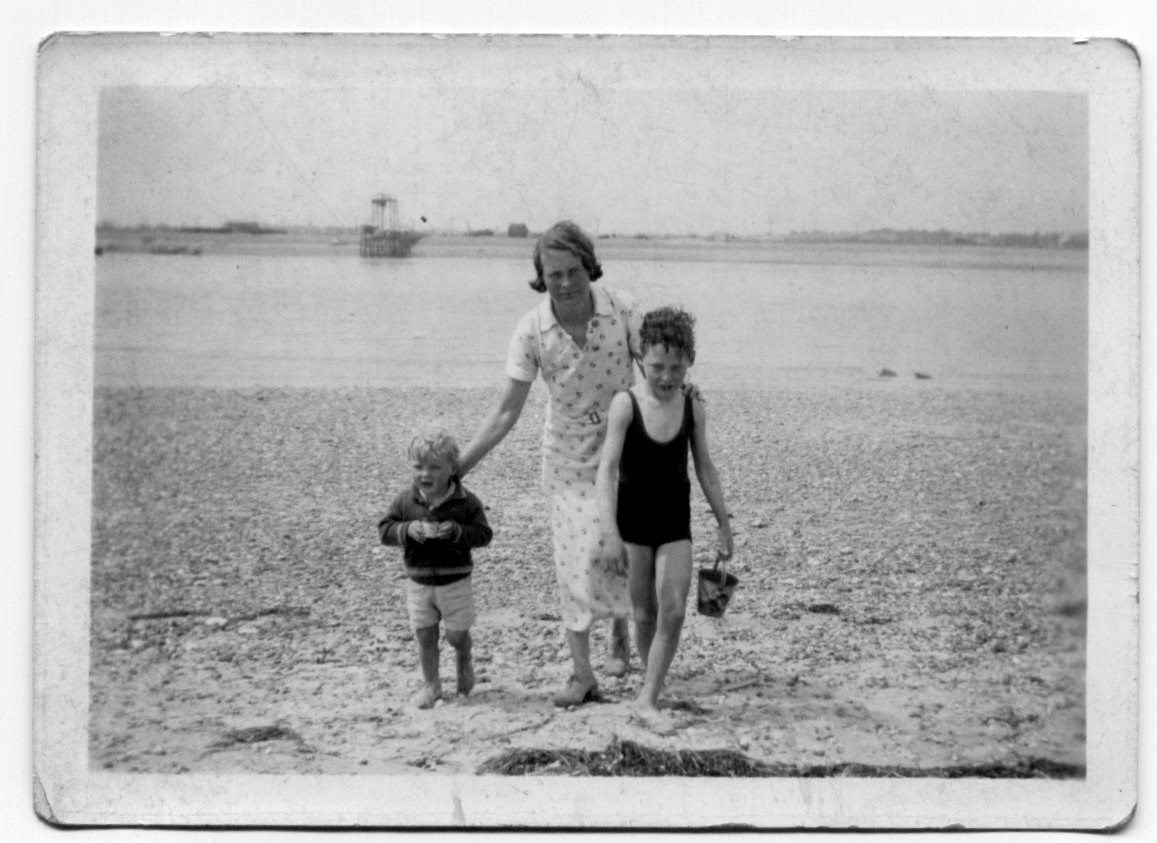
“All these events happened as part of my life with no special dates to really register the passing of time, until June 1939. These are the events as I remember them. My father, as I’ve mentioned, was a stevedore working on the docks and on this particular day whilst he was working he fell down the ship’s hold. This was a drop of about 35ft (10m) and although there should have been a safety net, on this occasion there wasn’t. However, so far down there was some staging, which they say helped to break his fall and thus saved his life. He received a fractured jaw, broken wrist in about 5 places and also other injuries. He was rushed to our nearby local accident hospital, my mother was informed and my brother and I were looked after by friendly neighbours. Of course I didn’t know about all this at the time, only that dad had had an accident. I remember my brother Bill and me going to see him about a week later when he’d been patched up and my dad asked us to give him a kiss. Well my brother did, but I’m afraid I just couldn’t face up to it and refused. His face was all battered and bruised, his lips all swollen and cracked and some horrible metal straps that were keeping his jaw in place. Maybe it was because I was at a sensitive age but I just couldn’t do it. He started to make a slow recovery and then was transferred to Whipps Cross Hospital and because he had been to this hospital before he suddenly realised where he was and his memory started to return, because before all was somewhat vague in his mind.
“Meanwhile some crafty solicitors, representing the ship’s owners I believe, came along and got my mother to sign on my dad’s behalf some papers which they say would entitle her to ‘workman’s compensation’, otherwise she will get no money. This meant dad would receive about £3 per week or thereabouts, but what they didn’t say was that we gave up the right to sue them, or so I was told in later years. Well, as I said, Dad gradually got better and came out of hospital and in late August we went on a late holiday to some relations’ cottage in Laindon where we had had holidays in the past. We had only been there a few days when all sorts of news started to come on over the radio. We had to pack up and do a quick flip back to London. Yes, that’s right, the Second World War was about to start.
“My father and mother explained to us as best they could what it had been like for them in the First World War 1914-18 when they were only children living in London with the old Zeppelins flying over. They said it would be far better for us if we were evacuated to the country where we would be safe, and so in September 1939 Bill (4 years, 6 months) and I (9years, 11 months) were evacuated to Bridgwater, Somerset.”
And so a whole new chapter in my life was to begin as Ron and I were sent away as evacuees.
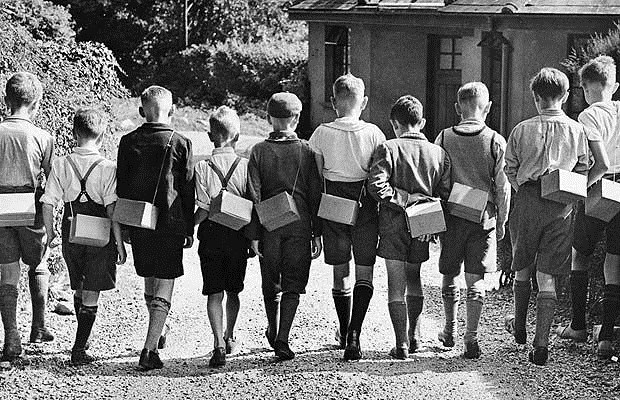
Orders to begin the official Government Evacuation Scheme were issued at 11.17am on 31st August 1939, and the first evacuees left London the next morning. In the next four days, 376,652 schoolchildren and 275,895 younger children with their mothers left the capital for areas of greater safety. (Source: The Telegraph)
The War and Evacuation
I have to confess that my memories of the events of our evacuation are hazy. I can remember travelling with a lot of other children on a train and arriving very tired at some school hall. Also some incidents during our time at Bridgwater, but I am going to refer to Ron’s story once again to fill in the background to that period at the beginning of the war.
“War was declared on September 3rd 1939, but even before that date there were all sorts of activities going on all around, which gave one a small clue as to what was happening. Air-raid shelters were frantically being built. Anderson shelters were constructed in most people’s gardens. Everyone was issued with gas masks and gas indicators were to be seen outside police stations and public buildings.
“Anyway off go my brother and I with our gas masks and luggage of sorts and labels hanging round our necks along with loads of other children, plus a few adults to the railway station. I think it was Paddington Station (as seen on Monopoly). We had said farewell to our parents with a promise to write home as soon as we could. No one had a clue as to where we were going and if anyone did, they certainly didn’t tell us. I seem to recall we were given some food somewhere along the way and finally after a very long day we arrived at this school in this town, still not knowing where we were. Names were called out and children would be meeting their new foster parents. Ours turned out to be a Mr and Mrs Thorne of 32 Bristol Rd, Bridgwater, Somerset.
“Firstly a little bit about Bridgwater, about 120 miles from London, 30 miles from Bristol and a similar distance from Bath. It is situated on the river Parrot, which has a ‘bore’ similar, but not as famous, as that of the river Severn. Admiral Blake was a famous son and his gardens are now open to the public as a park. The Duke of Monmouth is featured somewhere around about and there was a famous battle fought nearby called the Battle of Sedgemoor. So ends the history lesson.
“When we were all settled in, possibly after a day or so, we had to report back to the school and allocated different classes. The evacuees were kept separate from the local children and we also had our own teachers. We gradually all settled down to life as evacuees and were accepted by the locals. I wrote home to my mum and dad fairly regularly, about once a week.
“Mr Thorne worked for the local shirt factory. He had been in the 1914-18 war and had lost the tip off one of his thumbs. Mrs Thorne (‘call me Aunty’) kept house and she had long black hair, but I never saw it like that because she always had it tied up in a tight bun; they would be maybe 45-50 years old. There was a son called Kenneth who was 18 and worked for ‘Boots’ in the town, as a chemist. There was also a lodger who came on the scene somewhere along the way, and he was called Jack and was about 22. That sort of sets the scene for the household. Bill and I slept in a double bed in a room of our own. This was one area where we had a problem because poor Bill (don’t forget he’s only 4½) used to wet the bed, and every time this happened Bill was punished — no supper, certainly not anything to drink and other sorts of mental anguish. It got to a state where Bill would wake me up in the middle of the night and tell me that he’d wet the bed, and we would be frantically shaking the sheet up and down in an attempt to dry it out. Christmas came and went and I’m not sure when but we were issued with identity cards (my number was WOAL 167/5) and of course ration books. I can’t remember really what the rations were, also at this time we started ‘school dinners’.
“Life continued on apace; I was still in the cubs and I was a server at the church, I used to also have to take my turn at pumping air into the church organ. The reward for this was to be able to pick a pear from the vicarage grounds. We used to belong to the Odeon Junior Film Club and go to the pictures on Saturday mornings.
“We formed a ‘gang’ and to be a member one had to eat a cube of horseradish (about the size of an Oxo stock cube). We used to dig it up and cut the cube from the roots. I know it sounds daft now, doesn’t it! There also were some old disused brick ponds, and we used to make rafts and try to sail them. (Very dangerous I realise now). We were always told to be in house by a certain time and this was sometimes very difficult for us. We would ask a casual passer-by, (very few and far between) “Could you tell us the time please, Mister”. What! Big panic frantically trying to get all the muddy clay off our shoes, finally wiping them over with wet grass so they looked nice and shiny and then running home for all we were worth. Of course when we got home ‘Aunty’ would say, “Where have you been? Just look at your shoes.” We would look down at them and of course by now our lovely wet, shiny shoes had dried mud all over. “No supper for you tonight my lads,” and so off we were packed to bed. Now, I must tell you this, when we left London Mum told me that I was to look after my brother and make sure he was a good boy, he was told to do what his big brother told him or else. Having told you this you will understand this next bit I’m about to narrate. Here we were walking down the main street in Bridgwater and Bill did something wrong. I can’t remember what it was now, but as a result I smacked him. Well he started to cry and even tried to hit me back. (I remember I used to try to kick him on the shins!) Suddenly this woman comes up who had seen what was going on and said to me, “Leave him alone you big bully. You’re twice his size”. Where-upon to her amazement Bill turned to her and said, “He’s my brother and he can hit me when I’m naughty, so there”, or something like that. The woman just didn’t know what to say. That’s what I call brotherly love. I’ll never forget that.
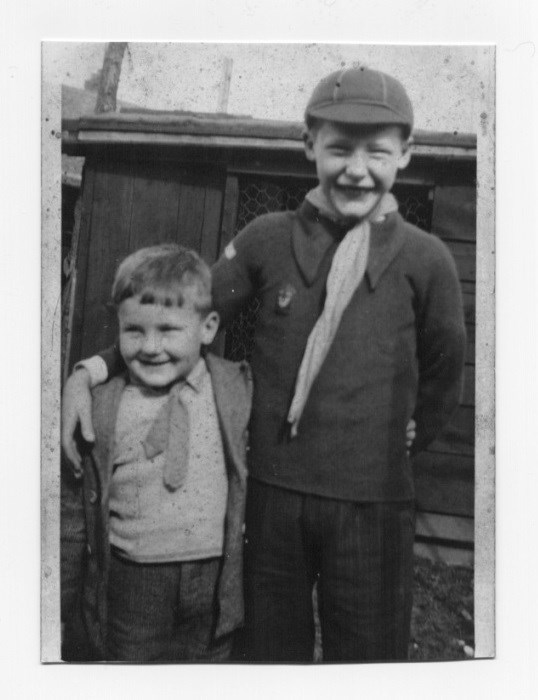
“Meanwhile back in London my dad started to have epileptic fits as an after-effect of his accident. I didn’t know about this at the time because they didn’t want us to worry. They would occur about once a month, but without any warning and the doctor said they could get worse or better. No one could say. He had to take phenobarbitone tablets to help him. I wouldn’t like to put any dates to this period, but the bombing had now started in London. Whether it was before or after Dunkirk I don’t know, but because of these troubles and my father’s health the doctor thought it best if he was evacuated, so he and mum went off to a place called Hemel Hempstead which is near Watford in Hertfordshire.
“As I said earlier the River Parrot had a ‘bore’ tide. This was quite a sight to see. The times of the tide were written on the notice board on the bridge in the main street. People used to stand on the bridge and watch it. ‘What on earth was it?’ you say. Well, one minute the flow of the water would be going along all nice and calm in one direction and the next minute this huge wave used to come along and completely change the direction of the flow. Apparently it used to catch quite a few animals by surprise and you often saw a dead sheep or two following in the wake of the bore.
“I reckon it would be about Easter of 1941 when my Mum and Dad, or maybe it was just Dad, came to see us on a special coach trip and for the first time we told him how unhappy we were. And so what happened, he made some feeble excuses to aunty about his health etc., and took Bill back with him to Hemel Hempstead with a promise that he would make arrangements for me to go to a special boarding school nearby where my parents were staying. Within a very short space of time, although it seemed like an age then, I was packed up and on my way to another adventure. Mind you, before I’d even left Mrs Thorne had got herself another lodger.”
I have a few memories of Bridgwater and of course I remember the problems I had with bed-wetting. Mrs Thorne used to rub the sheet in my face and rant at me. I remember being very thirsty at bedtime, but never being allowed a drink. However, there were some happier memories too when we were out at play. I can remember the Saturday morning cinema and the excitement of the cowboy films and a science fiction character called Flash Gordon. I remember seeing the Parrot bore and playing around the clay pits. There was always a terrible smell in the air around Bridgwater and this was because of fumes from the Cellophane factory. I have a memory of my first sweetheart! She was a girl who lived just along the road from us and I would walk to school with her and always tried to sit next to her in class.
I also have a memory of an incident near the river when we were playing on a jetty. Sometimes kids would pretend to push you off but catch your clothes at the same time so you never really fell but got a fright. On this occasion I was pushed, but the lad failed to get hold of me and I actually fell! Luckily the tide was out and I fell down onto the muddy shore. Ron came to rescue me and hauled me out, but I was in a real mess. I know we got into trouble when we finally got home. (Perhaps it was the same incident with the shoes that Ron describes above?)
Anyway as Ron describes, our Dad finally came to rescue us and I was taken back to live with Mum and Dad in our new home in Hemel Hempstead.
Hemel Hempstead & Boxmoor
Our home in Hemel was in a fairly large house converted into flats and I think ours was on the 1st floor. I remember it was just along the road from the school I attended and nearby was a sort of canal in which there were cress beds. (Watercress is very popular as a salad green and grows like a pond weed; Hemel was a famous growing area.) There were other children living in the house and we used to play together quite a lot.
Mum was going out to work and Dad was still too handicapped to work properly. We did not have a lot of money but my Dad did have ‘A Magician’ who sometimes left me treats. I should explain this although I was convinced it was all true at the time. Sometimes Dad might have some spare money and would buy me a treat (a small toy or sweets if he could get some). Quite cleverly he or Mum would guide the conversation round to the subject and I would express the wish to have such and such. Dad would look serious and say well he would have to have a word with his Magician and would pretend to go into a sort of trance. Then he might say the Magician had found what I wanted but it was somewhere in the room and I had to find it. I would start looking with the Magician telling me (through Dad) if I was ‘Hot’ (close to it) or ‘Cold’ (nowhere near it). Eventually I would discover the surprise and be amazed that the Magician could not only know what I had wanted, but had been able to conjure it into the room!
Ron never came to live with us at the house in Hemel but, instead, came to stay in a sort of boarding school nearby at Boxmoor. Let me hand back to Ron to describe this event for you.
Pixie Hill Camp, Boxmoor
‘Well, let me first of all give you a bit of background. Pixie Hill was built just before the war. It was a sort of holiday camp school for boys and its purpose was to give holidays for poor children of London who could not otherwise afford one. Unfortunately it was never used as such. Instead a whole school called Tollgate School, Plaistow, complete with teachers was evacuated there. My father had been very fortunate in finding me a place here. My luck was further in because my best pal from Leyes Rd, who I hadn’t seen for ages, was also there and I ended up in the same dormitory as him. His name was Brian Sellers, he was about a year, maybe 18 months older than me and he was the first boy I met when I moved to Leyes Rd. He left the area about 1938 when his mother divorced and left to live elsewhere. So it was great meeting up with him again and I soon settled in to my new life.
The school was completely self-contained, even having its own hospital. We never used to have any normal type holidays, because we couldn’t go home or anywhere if we did. Instead the headmaster at assembly would say, “It’s a fine day so I don’t want to see anyone in the classrooms”. Sometimes we used to be allocated jobs to go and help the local farmers. It could be fruit picking, helping with the wheat harvest or even (worst job) potato picking. We never used to get paid for these tasks as individuals, but instead the farmers would make a donation to the school fund. Eventually the headmaster bought for us a gigantic electric train set. Each dormitory could borrow it and on a weekend it went into one of the classrooms for anyone to use it, but under supervision. Each dormitory (5) was named after each continent (I think) and could accommodate about 40 or so boys with accommodation at each end for a teacher and a store room. So at a rough guess there were about 200 to 250 lads at Pixie Hill.’
This school was not far from us and we used to see Ron occasionally. He mentions in his story about putting on the school panto and I can remember going to see a show there. I can remember the show had a lovely song in it sung by a boy (but I think dressed as a girl) with a most beautiful voice. The song was ‘Lover Come Back to Me’ and it still brings back memories when I hear it. I can also remember having some refreshments in a dining hall, including a cup of tea. Unfortunately with rationing there was no sugar, but I spotted a jar with some in (or so I thought) and happily added some to my drink. It tasted foul! It wasn’t sugar, but salt! (Many years later I visited friends in Hemel and sought out the cress beds and Boxmoor).
We were in Hemel for about a year and out of the blue we were heading back to London and Leyes Road. The war was still raging, but the worst of the blitz on dockland seemed to have eased and Mum and Dad decided we could risk returning. So another new turn in my life and we were to be reunited as a family after 2½ years.
Back in London
Leyes Road Again
When we returned to London things had changed and my memories are stronger. The road was only just recognisable, as the whole of the Prince Regent Lane end was a bomb site. The school we had attended was just a pile of rubble. Luckily for us our end of the road was still intact.
Our house at number 74 was a terrace with a front room off a hall passage where the best chairs were kept and even an old upright piano. The passage led to the living room which had an old-fashioned black cast iron range, a dining table and chairs and a couple of easy chairs. Stairs led from here up to the two bedrooms with a coal firegrate in each. Through the back was a scullery that had a cooker and a fired copper boiler built into one corner. Alongside was what looked like a work surface, but when that was lifted there was a bath. The fire was lit under the copper boiler to provide the hot water for the weekly laundry and the weekly baths! Outside, attached to the scullery, there was a toilet and a coal house/store. There was quite a long garden where Mum used to grow pinks and carnations, her favourite flowers, but dominating it now was the Anderson shelter. This was built by digging a large pit and lining it with corrugated iron sheets curved at the top so as to meet and bolt together. Then the earth was heaped back all around it and over it so that it just looked like a mound of earth and grass. A couple of steps were cut at one end down to a small entry door. Inside on each side there was a low bunk bed and a few shelves. This was to be our refuge during air-raids which were still occurring though with less frequency than in 1940/41. (By 1941 Britain had won the Battle of Britain, stopping the massive air-raids which had been hitting the country until then. After that the Germans found it more difficult to mount raids, especially during the day, with such force and the air defences were coping much better.)
Beyond the garden was an area containing allotments where people had plots of land for growing their own vegetables and beyond that the river/canal called the Connaught. Past that was Victoria Dock Road which led into the docks and the trolley bus terminus.
Ron and I started back at school in Shipman Road, just the other side of Prince Regent Lane and so within easy walking distance. Because Dad was still unfit for work it was Mum who went out to work every day, while Dad stayed home to look after us and the house. He must have got very bored with his life, but luckily for us he did not drink alcohol so at least didn’t turn to that to relieve the boredom. What he did love to do was play Whist and he would go to Whist Drives where he often won small cash prizes. (A Whist Drive is where a number of people gather together to play the game. They are divided into tables of four and after each hand two of them move on to the next table. After all the hands have been played and everyone has played everyone else, the tricks scored by each person are added up and those with the best scores share the prize money which comes from all the entry fees they have paid.)
Mum worked at the railway yards in Stratford, not far on the trolley bus, cleaning the engines and carriages. It was a hard life for her, but we kids were never really aware of these things. Our lives were a long round of school and play.
I don’t remember much detail about school. I remember we had milk issued every day (a small 1/3 pint bottle with a cardboard disc as a lid in which you pushed out a smaller hole to stick in a straw.) We used to collect the lids to play a game with cigarette cards. These were so named because these small cards came in each pack of cigarettes and we used to collect them a bit like nowadays people collect Doctor Who or MatchAttax cards. They came as sets with different subjects; cricketers, footballers, flowers and all sorts of other subjects. On the front would be the picture and on the back information about it. We never often collected a full set, but were just interested in getting as many cards as we could. We would play each other to win them and this is where the bottle tops came in. One way of playing was to prop a row of cards against the wall (each person putting in the same number) and then you would crouch some way away, usually the other side of the pavement, and flick a bottle top at the cards. Any that you knocked down you kept. Another way was to just flick a card ahead of you each in turn. If you managed to land your card overlapping another card or cards you picked them up to keep.
Another memory of school was that we did not always stay in for school dinners. Sometimes I would take my sixpence (2½ p nowadays) and go to the Pie & Mash shop. These were a tradition in London and were cafés where you could buy these mince pies served with a big dollop of mashed potato and covered in ‘liquor’, a sort of thick green gravy!! They also sold stewed and jellied eels. Mum and Dad loved these but it was a long time before I got the taste for them. What I do remember is that these shops also often sold the live eels which you could take home to cook yourself. Mum sometimes did this but they are very slimy and slippery to hold when you were trying to cut off their heads and gut them! It was usually better to get the shop to do that bit since they were well practiced at it. A few years later I used to love watching them down the market because they were so quick at it. Most of my other memories of living at Leyes Road were about our playing out!
The bomb site at the end of our road was a great playground. One of the things we did was to look for pieces of roof slate and then carefully chip away at it to form the shape of a gun. These were our toys for playing Cowboys and Indians or for fighting the Germans! We also explored the ruined houses and buildings to look for any ‘valuables’ that might have been left lying about. I remember we once found a pile of plastic discs in the ruins of an old shop and thought they were valuable ivory. I think they were just counters from a set of Tiddlywinks or something like that.
We all had catapults which we made by finding the right shaped branches from a tree and attaching ¼ inch rubber elastic to it. We became good shots and used to practice firing at old bottles and jars. A favourite target was to throw an old light bulb into the Connaught behind our house and then see who was first to hit and sink it. All this would be considered naughty these days and I would not encourage small children to try these things now. But it was good fun!! The river did give us the opportunity to fish for ‘tiddlers’ or sticklebacks (small fish about 2 inches long) and we would keep them in a jam jar with a piece of string tied round the neck to form a carrying handle. Just the way Ron described earlier, as he and his mates did before the war when he was my age.
Having a big brother was useful and Ron taught me all sorts of things, including how to roller skate. He was very good at it, but it did not take me long to be capable of staying on my feet most of the time. Because there was very little motor traffic around our street it was OK to just skate along the road; something you could not do now very safely. Some motor traffic went along Victoria Dock Road and I can remember hanging on the back of them and being towed along on our skates. Again very dangerous and not to be recommended… In fact if our Mum knew about it we would have been in for a smacking. Not that our parents hit us much, but if Mum got cross and upset she would sometimes give us a smack around the ear. Not very hard but we used to shout out, “Not with your ring hand, Mum.” This was because she had quite a heavy gold wedding ring on her left hand and even with a gentle slap it could hurt!
Most deliveries were still done by horse and cart although some of the milkmen had electric trolleys which would come rattling along the road. I sometimes used to help our milkman on his rounds by going along with him and dashing back and forth with the milk from the cart to the front doors. He would give me a few coppers at the end and I would buy some sweets or a treat if I could find a shop that had any in. That may sound strange but sweets, along with most things, were rationed and even if you still had some coupons left in your ration book it was difficult to find anywhere that had the supplies. News would flash round the neighbourhood if some shop got some delivery and there would be a mad rush to get there before everything was gone and you often had to queue and hope there was still some left when it was your turn.
Most of our play was in the streets or on the bomb sites and when we were not at school we would be out and about. The girls would have skipping games or swinging on a rope tied to a lamp post. Boys sometimes joined in these games, but usually we had our own games. Football, cricket, marbles and playing with cigarette cards as I have described, were all favourites. We also played with spinning tops which were shaped a bit like a mushroom and you kept it spinning on the ground by whipping it with a leather lace tied to a stick. A hoop and stick was another popular game. The hoop was usually an old bicycle wheel rim and you bowled it along and ran alongside it keeping it upright and moving with a stick or piece of iron.
The boys tended to form into gangs and go around together and although we got into mischief and even had fights with rival gangs they were not like today. At most we would have stone throwing battles and raid each other’s ‘dens’, which were usually makeshift shelters built from old boards and corrugated sheeting that would be lying about the bomb sites. Even within a gang there would be disputes and fights to see who was boss. A fight could either be with fists or wrestling and it never usually went too far before a winner would be declared. I never liked fighting with fists but I was good at wrestling so was able to hold my position in the gang. Another way of establishing the ‘pecking order’ in the gang was through your deeds of ‘derring-do’. This could involve climbing a particular obstacle or being prepared to jump down from a spot higher than anyone else; perhaps even proving to be a better shot with the catapult.
The war was still going on, but for us kids the main effect was through rationing of our sweets and goodies and the air-raids. As I said these were less frequent during the daytime but were still quite common at night. Because we lived near the docks these were a target for the German bombers, and so we had to take precautions. If the raid was during the day we had to go into the nearest public air-raid shelter. These could be a reinforced concrete building especially built, or sometimes a basement of a building or down in the underground railway stations. At night it meant getting out of the house quickly and into the Anderson shelter in our garden. We would sit there with a small paraffin lamp or a torch and listen to the drone of the bombers and the crump of the bombs falling. A siren would sound when the bombers were coming and it would sound again when they had gone. Once the ‘All Clear’ siren went we would come out of the shelters and look around to see what damage had been done in our area. We were lucky that none fell too close to us while we were in Leyes Road but in nearby streets we would see the effects of the bombs on the houses and hear about who had been killed or who had miraculously escaped. As kids we didn’t really take in the horror of all that and, in fact, thought it an adventure to explore recent bomb sites to look for pieces of shrapnel (bits of bomb shell or casing). Ron once found a whole incendiary bomb shell which was his pride and joy as a war trophy.
As part of the air defences there were ‘ack-ack’ sites (areas where anti-aircraft guns were placed) and there was one quite near us where we would go to look through the fencing at the soldiers tending their guns. Another defence was the raising of balloons high up into the sky. What good would a balloon do you might ask. Well these were huge balloons like the big blimps you see hovering over sports events nowadays and they were tethered by long steel cables which could be winched up and down. Because they went very high up into the sky they could stop the dive bombers coming too low to make it easier for them to hit their target. You see there were two types of bombing raid. One was by big bombers high up that dropped high explosive bombs or bunches of incendiary bombs (smaller bombs that burst into flame and could cause widespread fires). Because they had to drop these bombs from a height it was not always easy to be accurate. The other type was by dive bombers, slightly smaller but faster and more manoeuvrable, which would drop low over the target and drop their bombs as they were approaching their target. These were a bit more accurate and you may see film of this type of bombing when the planes attacked a particular object like a ship or road convoy. They might also come in firing their machine guns as well so you see it was important to stop them flying too low. That is what the barrage balloons, as they were called, were for. Not so much the actual balloon, although I don’t suppose it would do a plane much good to fly into one, but the cable that the balloon kept up. It would be very difficult for a plane to fly in and keep dodging a network of vertical cables suspended in the air which could not easily be seen.
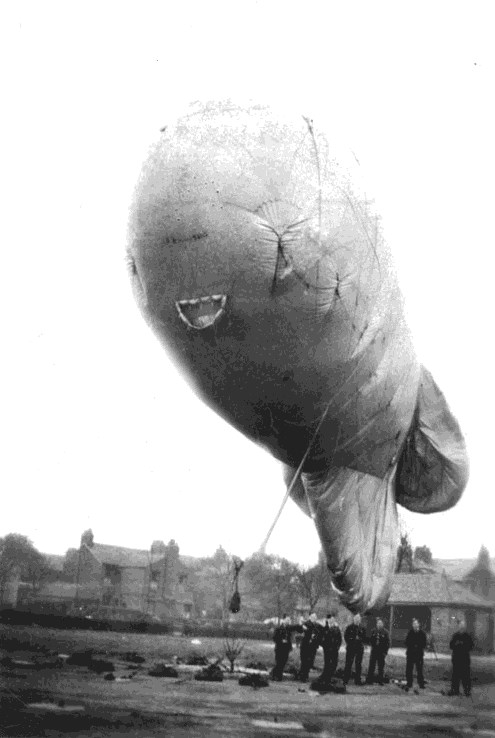
At night during a raid the sky was spectacular around our area. The guns would be firing, but to help them see their target they had huge searchlights that shone into the sky to try to pick out the planes in their beam. The light beams would be swinging this way and that across the sky like a giant laser display that you see nowadays at concerts and things. To us kids it was all a show but to the adults it was in deadly earnest.
Because we were near the docks we would often go over to the dock exits in the hope of catching the arrival of a boat from America. Why? You might ask. Well the US sailors did not have rationing like us and we would hover around the gates as they came out for some shore leave and try to cadge sweets or chewing gum from them! “Got any gum, chum” was a common catchphrase used to address the Yanks, as the Americans were called. If we struck lucky it was considered a great coup and we would dash off to share our spoils. The chewing gum they had was the long strip type and at that time it was not available in Britain. Our chewing gum was the small, sugar coated, type. We also had bubble gum which was fun when you could get it! We would have competitions to see who could blow the biggest bubble.
So life went on around Leyes Road for a year or so. Dad still suffered from his fits and these were always a bit frightening although gradually he was able to tell when one was coming and could prepare himself and us. You see a fit involved him collapsing on the floor and writhing around for some time until he just seemed to lie unconscious. After a time he would regain consciousness. He usually had a terrible headache, and would have to rest for a while. At that time it was thought best to try to get something between his teeth for him to bite on because during his fit his mouth would clamp tight shut and if his tongue happened to get in the way he could give himself a nasty bite or even bite the end of his tongue right off! We children learned how to cope with this and could take the appropriate action, but I remember being out with him on one occasion when a fit came on. I stayed relatively calm and tried to do what I was supposed to but the people around panicked a bit and tried to get me out of the way and call for an ambulance. By the time the ambulance arrived the worst of the fit was over and after a rest we were able to carry on and make our way home. The adults couldn’t believe that a small 7-8 year old boy would know what was needed.
Family holidays were rare at this time but we did occasionally get away as far as Laindon or Southend. Nan had some relative with a sort of holiday chalet at Laindon and it was great to be out in the country. Dad loved to go picking blackberries or nuts and it was great fun foraging in the woods after being on the streets and bombsites. We also went down to a Great Aunt Polly in Bognor Regis (a seaside town on the South coast of England). She had a huge garden with an orchard and we were allowed to pick our own apples and pears. This was a rare treat for us and I guess we might have overdone it a bit and ended up with tummy aches!
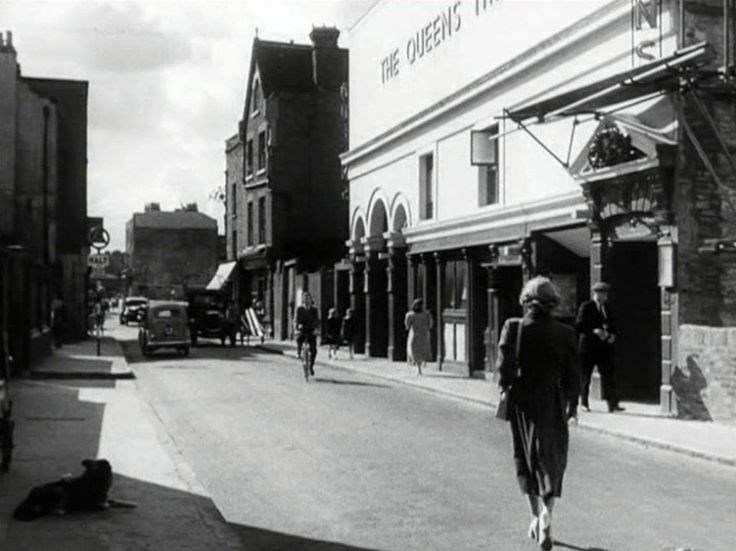
Of course throughout this time there were regular visits to Nan’s house and sometimes if I was in a bit of trouble at home I would run away to Nan. This would involve me telling Mum or Dad that I was running away and they would say “OK then, you had better pack your bag and go.” Then they would pack this very small brown suitcase with my pyjamas and underclothes, give me sixpence and send me off! I would walk round to the trolleybus terminus to catch the bus to Forest Gate, change onto another bus and arrive in Poplar and my Nan’s house. After a day or so Nan would reverse the process and off I would trot back home or perhaps the family would come over for their regular visit. Remember there were no mobile phones and such and we never even had an ordinary phone so my parents must have had great trust in my being safe and able to do the journey. In fact until she died, running off to Nan’s was a regular haven for me and I loved visiting her. We would go off on trips into the West End (of London) and go to the theatre or have tea in a Lyons Corner House or just go to the local variety theatre. Ron mentioned about Dad working at the theatre in Poplar and getting free tickets. Well at this time it was Uncle Henry who worked there and we were able to go along almost anytime and climb the stairs to the Upper Balcony box office (which was separate from the main one). The lady there was a friend of Uncle Henry and if there were seats available she would just let us in. I remember seeing quite a few of the famous music hall artists of the day. Ted Ray was one and Max Miller was another that I remember.
I would also sit with my Granddad and play cards or dominoes with him. He taught me to play Cribbage which has been a favourite card game throughout my life. I mentioned that Granddad had bad arthritis but I think it may have been something a bit more serious. All I remember was that his legs were crossed in front of each other and he had to shuffle along with the aid of his walking sticks. This meant that he spent a lot of time just sitting so he was glad of someone to sit with and play cards.
Around the middle of 1943 Mum and Dad announced that we were once more on the move. Apparently the lawyers had been in touch with my Dad and instead of him getting a small weekly payment as compensation for his accident they would pay him one lump sum. I never knew how much, though Ron seems to remember it was £1500; not a lot today but it was enough then for Mum and Dad to decide to buy a restaurant business. They went into partnership with friends called Harry and Daisie Marshall and bought a business in Wandsworth, south-west London, called The Rendezvous Restaurant. It was a big house at 16 Bellevue Road, right opposite Wandsworth Common and was big enough for both our families to live in. The Marshalls had three daughters around the same ages as Ron and me. So began another phase of my life in another home!
The Rendezvous, Wandsworth
Living at the Rendezvous was a real luxury compared to all our other homes. For a start there were indoor toilets and bathrooms. No more creeping outside in the dark with a torch to go to the toilet. Hot running water for a bath! Another great benefit was lots of food available. Although rationing still applied to a café or restaurant your allowance depended upon the returns you made to the authorities about your turnover and the number of meals you served each month. I think our own meals could be included in that, but at any rate it meant that there was usually butter and eggs available and plenty of meat.
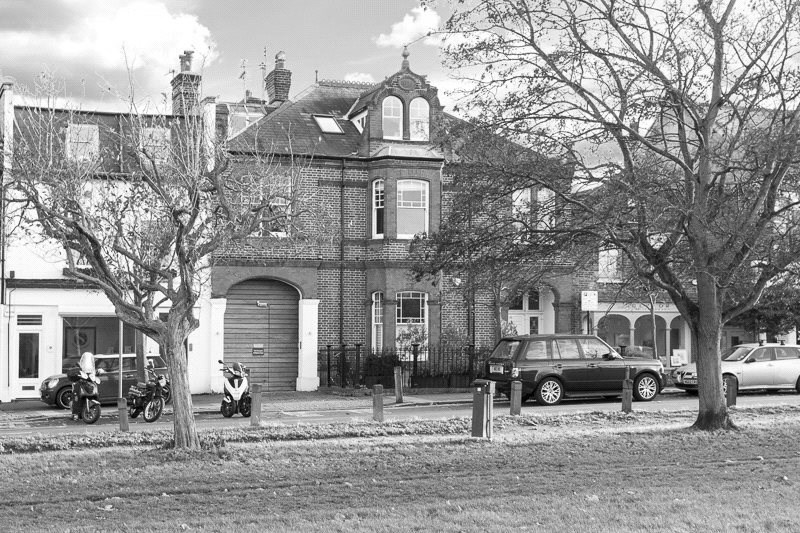
Our move meant that I had to start at yet another new school. That made five so far and I was still only 8-9. I settled in alright and seemed to make reasonable progress. At least I don’t remember getting into any trouble for being behind everyone else. I don’t have strong memories of that school, which was a short walk away near Wandsworth Common railway station. I do remember that in late Spring the country celebrated Empire Day*, a bit like the May Bank Holiday nowadays. It was traditional on that day to do the Maypole Dance.
* Empire Day was held on May 24th. It was instituted in the United Kingdom in 1904 by Lord Meath, and extended throughout the countries of the Commonwealth. This day was celebrated by lighting fireworks in back gardens or attending community bonfires. It gave the King’s people a chance to show their pride in being part of the British Empire. In 1958 Empire Day was renamed Commonwealth Day, in accordance with the new post-colonial relationship between the nations of the former empire.
Anyway this involved a tall pole, like a lamp post, and a lot of long coloured ribbons tied to the top. Each child had to take hold of a ribbon and hold it as far away from the pole as it would reach and all form a circle round the pole, making sure the ribbons started off untangled! Got that so far? Then you turned to face each other in pairs. Now comes the tricky bit! You had to skip lightly round the pole holding the ribbon up high with the hand nearest the pole and weave in and out of the person coming in the opposite direction. As you went on the outside of the first person they ducked under your arm holding the ribbon and then you ducked under the arm of the next one you met on their inside. Are you still with it? If it all went to plan the ribbons got shorter and shorter as you went round and round the pole and they formed a pretty coloured criss-cross pattern down the pole. That is IF IT ALL WENT TO PLAN! I can remember practicing this performance time after time and since we were just small children you might imagine we kept getting it wrong. We would go round the outside when we should have ducked under the inside. Someone would drop their ribbon. I don’t know how the teachers managed to keep their temper but I do remember we eventually got it right for the big day.
Back at the restaurant my Mum worked in the kitchen and was learning all sorts of new dishes from the chef who had stayed on when we took over the place. He was a lovely old man called Mr Bach. Dad looked after the accounts and such while Daisie Marshall did the waitressing. Harry Marshall was a lorry driver and went off to work. Sometimes if it was busy I was allowed to wait at the tables. Remember I was only eight but I used to get dressed up in my best shorts and white shirt with a small bow tie and take the orders and carefully carry the plates to the customer. I wasn’t able to carry three or four like you see proper waiters doing but I managed quite well. I think the customers thought it was cute for a little boy to be waiting and I would get some good tips! Ron and I also used to earn some pocket money preparing food in the kitchen. Not cooking of course but peeling potatoes and shelling peas. There were no frozen or ready prepared vegetables in those days!
By this time Ron was 14 and attending a special college to learn building trades and the like. The war was still raging and the air-raids continued although they seemed less common around us than they had been in Dockland. We did have a major scare on one occasion and were very lucky to escape serious injury. A parachute landmine had dropped on the Common just opposite us, but luckily had got caught up in the trees or something and had not exploded. We were all evacuated from the house while the bomb disposal team were called to tackle it which they did without it exploding and causing enormous damage to the buildings, including ours.
We didn’t have an Anderson shelter in our garden here; in fact we never had a garden, just a back yard that had been horse stables. When the raids got heavy we had to go along the road at the edge of the Common to a big public shelter. You could, sort of, reserve your bunk in these sometimes and there was a period when we spent regular nights trooping down the road to spend the night in the shelter.
Sometime in early summer 1944, something new happened in the air-raid department. A new German weapon appeared that was to cause quite a stir. This was like a small unmanned plane, complete with wings and jet rocket at the back to propel it. The problem was that it was a huge bomb! When these things started to arrive over the country the government thought they were a new super-fast fighter plane (a bit like a jet fighter which was to come much later) and the RAF sent up the usual fighters to engage them in air combat. Unfortunately they were fast and it was not easy to shoot them down. When they arrived over their target, mostly London at first, their rocket engines would cut out and they would just dive down to earth with an almighty explosion. They were called V1 rockets but were quickly nick-named Doodlebugs or Buzz bombs (because of the bee like droning noise they made). They brought a new and deadly threat to the people but amazingly people began to get used to them. Because they flew on a straight course and you could hear them coming it was easy to predict where they were likely to land. If you were not in their flight-path you were safe. If you were in their path you would listen to their engine as they approached and if it got very loud, meaning it was nearly overhead, you were also safe. You see, it was only after the engine cut out that the bomb would start to dive down to earth. You could even stand out to watch their progress. The real problem was if you saw one coming toward you and you saw its flame cut out BEFORE it reached you. Then you were in trouble! When they first started people would react the way they did in the old raids and run for shelter and sit listening for the crump of the explosions. After a while they realised that this was not like a raid by dozens of bombers dropping hundreds of bombs but a one off, albeit very big, bomb. Mind you, Jerry did send a lot of them one after the other, but you could still watch them. As a result a lot of people preferred to stay out and about but just keep their eyes and ears peeled for signs of one in their neighbourhood. That is what I preferred to do and, although Mum would worry about us, when we were out she knew that we would take shelter if danger came. Well for the most part that worked fine but I did have a close shave!
My mate and I were out one day near to Wandsworth Common Railway station when we heard the Doodlebug and were able to spot it in the sky. Unfortunately it was heading in our general direction so we were extra wary and just hoped it would pass over. We kept a close eye on it as we headed for home but then the noise stopped and we saw it tip down towards us. We both knew it was going to hit somewhere close by so we both ducked down behind a brick wall in front of a house and put our heads down and covered our ears. People were running for whatever shelter they could find. There was an almighty bang and we could feel the ground shake and the air rushed about us. There was dust in the air and when we poked our heads up above the wall we were amazed. Not far away across some open ground a whole railway wagon was perched on top of this big concrete shelter and rubble was all over the place. We took one look and ran for home as fast as we could. Mum breathed a huge sigh of relief because she knew it had been pretty close by and I was out there somewhere.
The aftermath of that particular bomb was to be pretty dramatic for me. First of all it had apparently landed on the railway close to Wandsworth Common station. It was also close to my school and caused a lot of damage which meant the school had to close down. No more school and an early start to the summer holidays! Secondly it was a bit too close for comfort as far as my Mum was concerned and I think she started to worry much more about my safety.
(I have since investigated this incident to check whether my memory was correct. Records show that a V1 did drop near Wandsworth Common Railway station at Ravenslea Road on the afternoon of 30th June and from my memory of where I hid behind a wall we were no more than 400 yards from it. What a lucky escape!!)
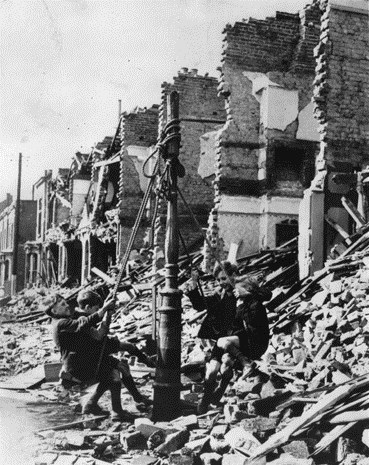
Shortly after that incident the Doodlebugs were joined by another weapon that was more deadly. The Germans had developed a more powerful and faster rocket. This one did not fly like a plane but like a modern day ballistic missile or space rocket. It also flew faster than the speed of sound which, unfortunately, meant that it hit and exploded BEFORE you heard it coming! They were called V2 rockets but people took them too seriously to come up with funny nick-names for them.
That summer, shortly before the V2 raids began, the whole family went on a holiday. We went to a small seaside village in Cumberland (now Cumbria) called Lowca, near Whitehaven. A strange choice looking back on it and I do not know to this day whether it really was chance or a crafty plan on the part of my parents and Uncle George. Be that as it may, we had a fun holiday up there wandering the hills far away from the rockets. It was great doing things together like going out in a fishing boat and just being together safely. Then we went to visit someone my Uncle George (Mum’s brother) knew. The family that owned the company where uncle worked were called Newton and they had a holiday flat in Keswick, not far from Lowca. A Mrs Mills looked after the flat and lived nearby. Why don’t we drop in to see them? They lived in a lovely little cottage and had a son about three years older than me called Ian. Well we did and Mum and Dad seemed to have deep conversations with Mr and Mrs Mills while I was sent out to play with Ian to get to know each other. I was never to return from that holiday to The Rendezvous!
As I say I never knew whether or not this was all a plot but what I was told was that the family were once again worried about the safety of being in London. Uncle George had suggested to my Mum that if she was so worried perhaps they should send me away again and this Mrs Mills might be willing to take me in as an evacuee. So I was left with the Mills family and Mum, Dad and Ron returned to London. I was to enter yet another new phase of my short life and one which holds bitter-sweet memories. There would be times when I was desperately unhappy there and others when I had wonderful adventures and fun. The lasting and really great outcome of it all was that I was to form a strong and lifelong friendship with Ian Mills as well as a loving relationship with his parents, Olive and Herbie/Mick until their deaths many years later.
Evacuation Again
Keswick
Firstly, a little about where I was to spend the next year of my life. Keswick is a lovely market town set in the north of the Lake District and nowadays it is a very popular and busy tourist destination. The Mills’ family lived just outside the main town in a small cottage; 2 Lydias Cottages, Brigham. It was tiny, with a small living room that you entered straight from the front door and a tiny scullery/kitchen off to the left. From that a small flight of stairs led up to two bedrooms. What about the toilet and bathroom you might ask? Well there was neither! The toilets were a row of six situated behind the other row of cottages that were off to the left about 20 yards away. Also round there was a wash house where the householders could do their weekly laundry. What a come-down after the Rendezvous where I had just got used to the luxury of indoor toilets and a bathroom.
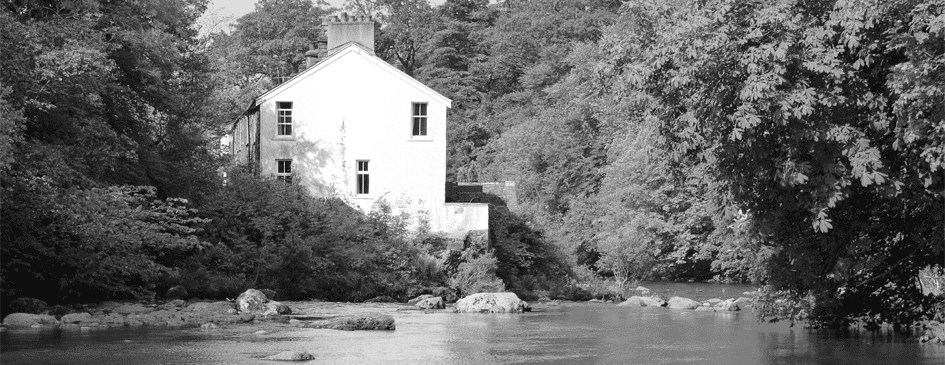
I was to sleep in the smaller bedroom, sharing the bed with Ian whom I had only just met and who must have been wondering what his parents had landed him with. I can’t remember in detail what I felt in those early days after Mum and Dad went back to London except that I know I was very unhappy. In those first few weeks I kept trying to run away and I would climb out of the bedroom window but Ian usually either stopped me or brought me back. As I said, however, things were not all misery for I think children have a great capability to live for the moment and let other problems go away.
In those first few weeks Ian introduced me to the other children in the area and I soon joined in all their games and adventures. It was a lovely area around Brigham. Just across the road from Lydias cottages was the Twa Dogs Inn where Mr Mills would go for his drink, a ‘Black & Tan’. (You may not know what that is but it is a drink made up of half bitter beer and half Guinness stout). It was his favourite drink; not that he was the sort who would go off to the pub every night and get drunk. He could be quite severe with Ian and me although it was usually Ian that got the brunt of any scolding since he was a bit more than three years older than me. Mr Mills’ name was Herbert but was either called Herbie or Mick. In later years Ian was also often called Mick; I think it was a sort of family nick name. Anyway, Mr Mills worked in a mill, which was a coincidence wasn’t it! In fact it was a bobbin mill which you may never have heard of because nowadays they hardly exist except as historic monuments. (There is one at Finsthwaite near the bottom end of Windermere in the Lake District if you are ever up that way.) Bobbins were like giant cotton reels. They were produced very quickly on a wood turning lathe in a factory, or mill, where the machinery was all driven by the water power from the river. They were then sent to the cotton mills in Lancashire where the cotton thread would be wound round just like a small cotton reel that you use at home. These were then set up on the weaving machines in the mills to weave all the cotton fabrics. (Here ends the economic history lesson – sorry about that, I got carried away!) I have a strong memory of him returning home in the evening with his overalls covered in sawdust and he would stand in the room by the coal cupboard door and strip them off trying not to get sawdust everywhere. He often had a sack with him that contained bits of waste wood cuttings and even whole bobbins that were rejects because they had some fault or other. We even had a huge bobbin as a stool that sat by the fire at one end of the living room. I liked to go to see him at the mill to see all the machines working away and the lovely smell of wood being worked.
Anyway, back to the children and our games. Next to the Twa Dogs was a wooded copse where we would tear around with our swords or acorn guns or pea shooters and fight pretend battles. Hold on you might say, “What’s an acorn gun?” “The same as a potato gun only bigger”, says I. “Clever clogs, alright then, what’s a potato gun?”
Well, all you need is a length of tube of the right dimension, bigger for the acorn than the potato gun. We used a section of cane for ours but for the potato gun you can usually buy a small ready-made tube and plunger. For the acorn gun you need a tube about 1 foot long (30cm). You squeeze an acorn into each end and then use a stick to push the acorn from one end towards the other. If you push hard enough the other acorn will fire out of the tube and travel a good distance. It all works by the power of compressed air. Nowadays you can buy ready-made plastic toys that use ping-pong balls or such like, but at that time we had to make our own toys. (Here ends the science lecture – sorry I got carried away yet again!!) Swords, bows & arrows and such were cut from ash and willow trees and most boys would have a pen-knife as a basic piece of equipment for such tasks.
Because I was under the wing of Ian I was quickly accepted by the other children although I still had to prove myself. Luckily I was good at sports and I could run and climb with the best of them. In fact my climbing prowess was highly regarded and I was often the one to climb into difficult areas when we went bird-nesting. I remember climbing along the girders of the railway bridge over the beck to find a nest. That’s another thing that is discouraged now since it is important to preserve the bird life but in those days most boys in the countryside would have an egg collection. We did take care about preservation even then, though, because it wasn’t done to take more than one egg from a nest (or perhaps two if it was a big clutch). When you got an egg the next problem was how to keep it for your collection. If you just put it away it would go bad and smell the place out if it ever broke. So you had to ‘blow’ the egg. This involved carefully piercing a small hole in each end and blowing at one end to push the yolk and white out at the other. This was very tricky and often ended with a broken egg. It is all banned nowadays, but we had great times hunting for the nests all over the place. You can still do the same today, but take binoculars and camera instead and just look and observe the birds.
Just down the road from the house was Town Field, a park and open play space with lots of room for football and cricket. (If you explore street view on Googlemap you may find Town Field with the beck, and Twa Dogs inn. The copse is now full of houses in Latrigg Close.) Flowing alongside this was Greta Beck, a fast flowing mountain river which had lovely crystal clear water. In one corner the field dropped down to the riverside and formed a small shingle beach. The beck at that point had just passed some rocky section and formed a wide calm pool. That is where we were able to go swimming although the water was freezing cold. At that time I couldn’t swim but could wade in quite safely and splash about.
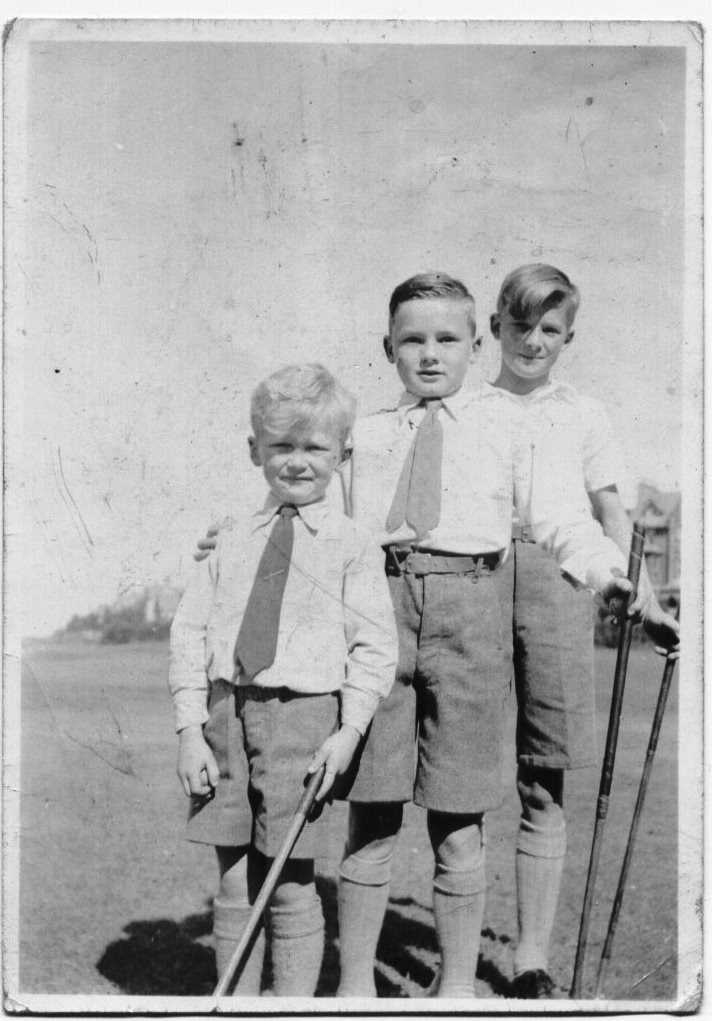
All those memories are of good times but, as I said, I had some miserable times too. You remember I talked about my wetting the bed when I was in Bridgwater? Well I have no recollection of the same problem when we were back in London but after I was left in Keswick it started again. This time the difference was that Mrs Mills was much kinder and poor Ian had to suffer the problem of waking up in bed with a soaking sheet and, often, his own pyjamas wet from my weeing! I would get very upset and we tried all sorts to solve it but it persisted. What was worse was that I started wetting and soiling my pants during the day. I was so ashamed, yet for some reason I found myself unable to stop. Sometimes when I was out and about I would duck behind a bush or something but that was not always possible. I attended the primary school in Brigham just along the road from the cottage and we had a very severe teacher. I was afraid of her a bit and I remember I would be too timid to put my hand up to be excused to go to the toilet and would sit at my desk and wee my pants. I know that sounds horrid now, but I assure you it wasn’t fun for me at the time. I remember I had a pair of thick brown corduroy shorts and Mrs Mills was always washing them out. By the way, in those days all little boys wore shorts until they were about 13 or 14. Not sports shorts, like football or tennis shorts, but proper tailored short trousers that came to the knees. We had long socks that came to just below the knee and were kept up by elastic garters round the top, although they would often fall down in a scruffy bundle around the ankles. In the picture below we are very smart though. This was taken in July 1944 shortly after I arrived in Keswick and shows me between Ian and my cousin Stuart.
In London I wore ordinary shoes but in some places in the North of England it was common to wear clogs. Not the sort you see little Dutch boys wearing, all carved out of wood, although these did have a wooden sole. On top of the wooden sole was a boot shaped leather top with leather laces to tie them up. Underneath a metal strip, like a horse shoe, was nailed for the sole and the heel.
They were very hard wearing and I was taken to get my own clogs made. I hated them! The leather top was so stiff that when I walked any distance, especially up a hill of which there are many in the Lake District, the tops of the boot would cut into the front of my ankle and leave a deep red groove. They were useful if you got into a fight with a bigger boy, however, because a kick in the shins from a clog was a pretty good defensive weapon…
I can’t remember the teacher’s name, but the Headmaster was Mr Etherington who was also a bit scary for me. The school was very small, just three or four classrooms as I recall, and our room had a big pot-bellied iron stove in the corner to provide heat. It didn’t seem to do much for anyone at the back of the room, but I remember the teacher would always stand in front of it when talking and often lifted up her skirt behind; to warm her bottom I suppose!
Despite my problems I still did well at school and was one of the best in the class. I remember there was an essay competition and my big rival for the prize was another evacuee. He beat me and the Head was full of praise for his essay because he had used interesting words like a ha-ha and a kraal. I had never heard of them and I suspect you may not have either. I am not going to tell you what they mean; you will have to look them up in a dictionary. That’s what I did as soon as I could and I have to admit that I think he deserved to beat me. His essay certainly seemed more interesting than mine!
Apart from my messing myself I can only remember getting into serious trouble at school once. It happened like this. The Lake District is famous for its daffodils; you may come across a famous poem by William Wordsworth called ‘Daffodils’ that you should read, and they grew around Brigham. In particular there was a lane leading up to a big house just the other side of Greta Beck where they grew along both sides on the banking. A friend and I were coming home along this lane and we both thought it would be nice to take some ‘daffs’ home and started to pick them. Along comes this lady and she was very angry for, although we didn’t know it, this lane was part of the private drive to the big house and we were STEALING! Not only did she take our daffodils but the next day at school we were called to the Headmaster and given a right lecture. Luckily I think he was secretly a bit sympathetic because he didn’t cane us.
Another event involving the Headmaster was to do with my singing. The school were to perform at the concert hall in Keswick and we practised our song in rehearsal. The head was the choirmaster and he was not happy with the performance and walked along the rows as we sang the song. When he came to me he stopped and told me to stop singing but just stand there and mouth the words. Apparently my voice was ruining the whole performance! That seemed to end my ambition to be an opera singer, but anyone who has heard me sing will tell you that head knew what he was talking about. At about that time, when I had been in Keswick almost a year, I was entered for the exam to qualify to go to Keswick High School. Ian had passed his entrance exam before I arrived and was already at Keswick High. By the time I came to sit the exam it had become subject to the new system called ‘The Eleven Plus’ and if you are interested I show an extract explaining it.
In the 1944 Education Act, schooling in the United Kingdom was rearranged so that children would be entitled to free education between the ages of 5 and 15. So children aged 5–11 would attend a primary school, and children aged 11–15 would attend a Secondary school. At this time there were three types of Secondary schools – Grammar Schools, Secondary Modern Schools and Technical Schools or Colleges. Each school was designed to fit in with the child’s capabilities, so a grammar school would suit those who were academic and wanted to go onto university, whilst a Technical School suited those who wished to pursue a trade, with a Secondary Modern fitting somewhere in between. All children took the 11 Plus exam in their final year of primary school and based on their performance in this exam, they would then go onto one of these three types of secondary school.
Although I was only ten at the time some places allowed students to take this newly introduced exam at that age. The outcome of that exam was to have an important impact on my life which I will describe later.
Before that I must tell you about my new bike. It was a present from Mum and Dad and must have been either for Christmas 1944, or for my birthday in February 1945. It was my first big bike although it was still not a full man-size frame. I guess Mum and Dad had sent the money for it but I went with Mrs Mills and Ian to buy it from the shop in Keswick. When I tried it out I could not reach the pedals properly, I was still too short! The solution was not to get a smaller frame which I would grow out of, but to fasten wooden blocks to the pedals so that I could reach. That done I was soon proudly cycling everywhere on my new bike. I must admit I was never a great cyclist like my brother Ron. I used to get tired so quickly and my bottom was always sore after a few miles! What the bike did allow me to do though was to get a job. I became an errand boy for the chemist’s shop in Keswick. In those days lots of shops had errand boys or delivery boys, whose job it was to take customers’ orders from the shop to their door. Nowadays, of course, it is all done by vans but the good old delivery bike was a common sight then. A proper delivery bike was much too big and heavy for me. They were made of thicker tubing than an ordinary bike and had a big metal frame on the front which would hold a large wicker basket. Often the space under the crossbar was filled with a metal plate painted to advertise the shop. Ian had a job briefly as a delivery boy using one of these bikes and even he had difficulty. In fact on one occasion he was trying to deliver a big basket of groceries and as he got off the bike it proved to be too heavy for him to hold and it toppled over. Out fell all the groceries, and there were broken eggs, bags of flour and sugar as well as broken bottles all over the place. He never kept that job for long! On my own bike, however, with a small basket on the front I could easily manage a few medicine bottles and boxes of tablets. Apart from taking the deliveries I also helped around the shop and really enjoyed it and of course I was able to earn my own pocket money.
The war was still going on of course, but things were going our way and the German army was in retreat across Europe after the Allies had successfully landed in the South of Italy in 1943 and then in northern France on D-Day in June 1944. The Russians were also pushing them back on what was called The Eastern Front. Before it was to finish a couple of major events happened in my absence from London. First my poor old Nan and Granddad were bombed out of their home in Cotton Street, Poplar where they had lived for many, many years. Luckily they were not hurt but a V2 rocket had hit the pub at the end of the road and their house was badly damaged. They had to move out and were put in temporary accommodation in Leytonstone, East London. The second was that my parents had had enough of the rockets and were also having problems with their partner in business, Harry Marshall, so had decided to move on. So by the time victory was declared in Europe in May 1945, VE Day as it became named, my parents had moved to a new business near Howden in Yorkshire. And so it was that, shortly after VE Day, Mum, Dad and Ron turned up in an old car to take me home!
Needless to say I was delighted but the journey back to my new home in Yorkshire was far from simple. You see their car was a ten year old Austin Ten but the problem was really about rationing and the shortage of essentials. Petrol was on ration and was in short supply but so too were tyres. As a result people used their tyres far longer than they should and punctures were always happening. We set off from Keswick to cross the Pennines on the A66 which was a tough drive for an old car with four people on board plus my luggage and my bike strapped on the roof. We got as far as Bowes when the car broke down; I can’t remember if it was a tyre or mechanical but in any case we had to stay overnight in Bowes. The problem was that someone needed to be back at the café in time to open up next morning. Ron volunteered to take my bike and cycle home although, at the time, neither he nor my parents realised how far it was. Anyway it took him all night struggling along on my bike with its wooden block pedals while we settled down for the night in a B & B. The next day the car still could not be repaired so we three had to make our way home as best we could involving buses, trains and hitch-hiking to arrive at my new home – Lee’s Transport Café.
Before I start on that chapter of my life I have to conclude with some thoughts on Keswick. Despite my miseries with bed-wetting and so on I had some good times and looking back now I think very fondly about the place and the people. As I have said, Ian Mills became a great friend and like another older brother to me. We subsequently spent many holidays at each other’s houses for I was to return to stay with the Mills’ family on many occasions.
Reunited Again
Lee’s Transport Cafe
My new home was no Rendezvous Restaurant! It was a long wooden hut placed on a series of brick pillars to keep it off the ground. At one end was a dormitory with about 12 beds; six on each side. The next room was the cafe with 8–10 tables and a small serving hatch into the kitchen which had a big table in the middle and a big coal-fired kitchen range. It had a walk-in larder where all the food was kept. The next room was the bedroom for Mum and Dad and beyond that was our living room. Outside was a storage shed, an old caravan where Ron and I slept, a wooden garage and a toilet house. This did not have a flush toilet, just a wooden seat above a galvanised tank which was emptied every week by the council lorry. In a lean-to shed behind the dorm were several wash sinks for the drivers to use. We had no electricity at first and all the lighting was by paraffin lamps called Tilley lamps. The radio was powered by an accumulator battery which had to be recharged at regular intervals. Pretty basic!
I mentioned drivers because they were the main customers of the cafe which was about a mile outside Howden on the main road to Hull. Around the back of the cafe was a road where the lorries would pull in and park. They would stop for breakfast or lunch or tea-breaks and in the evening they would stop over to stay the night in the dormitory. So that was to be my new home; not very luxurious but I was just happy to be back with my family and sleeping in a caravan was great fun as far as I was concerned!
Since I had arrived at the beginning of the summer holidays I had plenty of time to get to know my new home and surroundings. As I said, Howden was about a mile away and was a little market village but the Minster was quite renowned.
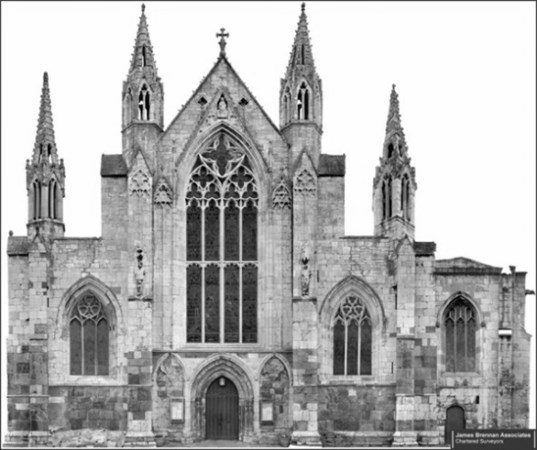
Our nearest neighbour was at Belby farm just along the road, run by a Mr & Mrs Bentley. They had three children, Margaret (a few years older than me), Joan (my age) and Charlie (a little younger). Opposite them on the main road was another transport cafe run by the Jackson family where there were two young boys around my age. I soon got to know the Bentleys very well since Mum and Dad had become very friendly with them and we got our milk and eggs from the farm. In fact Charlie and I became good friends although we did argue from time to time! I spent a lot of my time at the farm and quickly learnt to help around the fields and in the farmyard. We had a lot of fun chasing rats in the barns or searching for hens’ eggs. Over the next few years I tried my hand at various jobs around the farm including milking the cows. Although I managed to produce some milk I never became as good as Charlie or Philip, the main farm hand.
Farming at that time was still done by men and horses with very little mechanical equipment. Harvest time was very busy for everyone at the farm and I enjoyed helping where I could. The grain crop, mostly wheat, was not taken in by a big combine harvester like today. First it was cut by a horse-drawn machine that also tied the stems into bundles called sheaves. We followed behind picking up these sheaves and standing them up so that they leaned together like a house roof, about 4 or 5 each side; these were called stooks. This allowed the ears to dry out and kept them off the ground. After a week or so these then had to be collected in by stacking them on a flat-bed trailer drawn by a horse. Two men were up on the trailer and the rest of us would be forking the sheaves up to them. Stacking was a very skilful job because if it was not done properly the load would topple over. The cart was then taken to the open-sided barns at the farmyard and unloaded. Again the sheaves had to be carefully stacked in the barn. In the autumn the whole lot had to be threshed, which means the grains had to be extracted from the ears of wheat or oats. At this stage machinery was brought in although in olden times even this process was done by hand by spreading the sheaves out on the ground and beating them with sticks or flails. In some poorer countries this is still the way it is done! For the Bentleys it meant bringing in a threshing machine which was hired by the day. You had to drop the sheaves in a big hopper at the top and out at one end came the grains and out the other came chopped up straw, or chaff. Threshing time was really when we had fun with the rats because they lived in the stacks. As the stacks diminished the rats would make a run for it and it was our job to put paid to as many as we could with stick, air-gun or any other weapon we chose to use. It was pretty gruesome really but very necessary to keep them under control.
Back at the cafe I would help mum around the kitchen, peeling potatoes or shelling peas and slicing beans. One great advantage of living in a café was that there was really no shortage of food.
The main town nearby was Goole, about 5 miles away, and that was where, usually, we went to the cinema, although there was a small one in Howden. Goole was also where I was to go to the Grammar School although that was not to be for another year. Let me explain.
Although I had passed the 11+ exam that I sat in Keswick I was still only 10½ that summer and because I had transferred from another county I could not start at Goole that September. What to do with me? Well there was the junior school in Howden but it was decided that it did not make sense for me to go in the class with the other 10/11 year olds who would be preparing to take their 11+ the following year. So they put me in the top class with the 14 year old children! It was strange being among the bigger boys and I took some teasing, but I made good friends with one boy who helped me along and was a kind of protector from any bullying. In any case I was used to being with older boys having lived with Ian and also going around with my brother Ron.
So for that first year I attended school in Howden and would either cycle or walk there, or if it was raining Dad would run me there in the car as he went to do the shopping for the day. Some days I would come home for lunch but it would depend what was on the menu for that day. I always had some coppers in my pocket so that I could ring home at dinner break and ask “What’s for dinner Ma?” I had begun to call mum Ma around that time because nearly everyone in the cafe called her that even if they were older than she was! By the way, what we now call lunch was called dinner by us at that time and in the evening we had ‘tea’.
That year seemed to pass quickly enough and one or two things were happening at the cafe. For a start we got electricity! Not from the mains but from a generator that we had bought and with a bit of wiring it was able to supply enough power for some electric lighting. We also acquired an extension to the building. With the war over the government were dismantling some of the camps around the country and were selling the barrack huts, if you were prepared to collect them. Well there was a camp not too far away and with the help of one of the lorry drivers we all went off to this camp to see what was available. We bought this hut which would just fit nicely on to the end of the cafe. First, though, it had to be dismantled and loaded onto the lorry. Then it had to be put up again at the other end. Luckily there were always plenty of willing helpers among the drivers and it was soon in place. A door was cut through from our living room and there we were with a new bedroom for Ron and me. Luxury!
In the summer of 1946 Ian Mills came for a holiday and I went back with him to Keswick. Although I had continued to wet the bed for some time after I arrived at Lee’s Cafe, I soon stopped soiling my pants and by now had even stopped bed-wetting. So going back to Keswick was not to be a problem this time. No cars involved on this trip since we travelled by train. We had a good time together at both ends and the unhappy memories were put far behind me. I also went down to London to visit Nan but that trip was made by road in a big tanker lorry. You see, many of the drivers that came in the cafe came on regular trips from London to Hull and would often stay overnight at the end of their journey north. We became very friendly with some of these. In fact one in particular, called Charlie Covell, had brought his wife Win and little girl Pat to stay at the cafe before my arrival in order to get them away from the rockets.
He drove a big tanker for The Crow Carrying Company and if we ever wanted to go to London we could travel with him or one of his mates. On this occasion I went down with him and stayed at his home in Seven Kings, East London. Then I went to visit Nan who had been moved to Leytonstone from her home in Poplar. When the trip was over I came back up with him. It was quite an adventure to travel all that way in the cab of those big tankers and to stop at the transport cafés on the way for big mugs of tea, and egg and chips for dinner. Getting lifts from the drivers was a regular way for us to get about since there would always be a driver going somewhere near our destination. Even for people without our advantage of the café ‘hitch-hiking’ was a popular way of getting about. You often saw people along the road ‘thumbing a lift’, particularly servicemen on leave trying to get home or back to barracks. A lot of drivers were prepared to stop for hitch-hikers those days but it is not recommended nowadays and fewer people do it.
Come September and I was to start at the Grammar School along with Joan Bentley who had also passed her 11+. Because I had not sat my exam in Yorkshire they had no way of grading me and so when I started it was to be in the bottom class 1D. Joan was in 1B so I never shared a classroom with her. We got to school on the school bus that collected the children from villages all along the route of the main Goole–Hull road. It stopped right outside our door so I did not have far to go! It was very scary going to school that first day and getting on the bus with other children who were in higher classes. Some of the senior ones were bus prefects and were supposed to keep order on the bus. It was also strange turning out in my school uniform, the first time I had had to wear such a thing. I was still in short trousers and we had knee-high socks and a blazer and tie. I also had to have a smart new school satchel.
I managed with class-work fairly well, perhaps because I was in the bottom grade and had had the year at Howden in a more senior class. As usual, sports helped me to settle in with my schoolmates but it was a shock to find that instead of soccer the school played rugby. Although I coped pretty well, since most of the rest of us starters had never played rugby either, I never took to it like I did soccer and outside school I continued to play soccer.
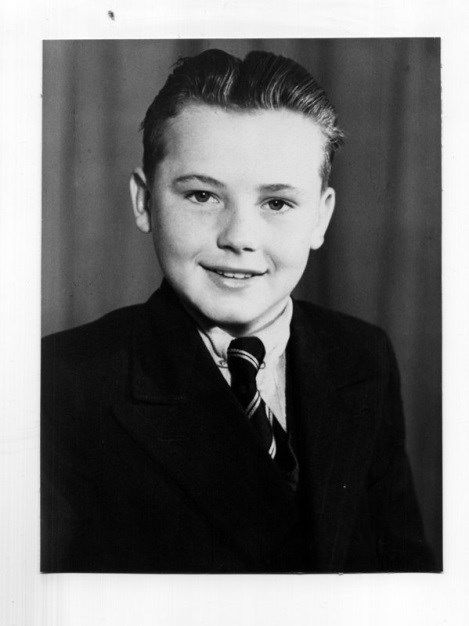
One good friend I did make was a boy called Ted Hoggard who had started at the same time. He came from the next village to Howden so we travelled on the same bus. At week-ends or in the evening I would cycle to his home in Eastrington and we would play football or just hang out together. We also went to yet another village called Gilberdyke where some other boys on the bus came from and we would all play football together.
The class teacher used to enjoy having his little joke at my expense. He used to say that I was “the bane of his life”, making a play on my name Bain and bane. If you look up the word you will see that it means ‘a source or cause of evil or misery’ so it was not very nice, but I don’t think he was really serious about it. He was not the first or the last to say the same sort of thing either so it was like water off a duck’s back to me.
One unusual thing happened that first year at school and it happened in the first term. The war had not long been over and many of the forces had not yet been de-mobbed so many of the farms still relied on The Women’s Land Army for their labour. In country areas it was also usual for the children of farmers to take time off to help on the farm. This particular year there seemed to be a real problem getting the potato harvest in so the schools were asked to help. So every morning after we arrived at school we were loaded onto buses and driven off to various farms in the area. Then we would be set to collecting in the potatoes under the supervision of the farmer or the Land-Girls as the women in the Land Army were called.
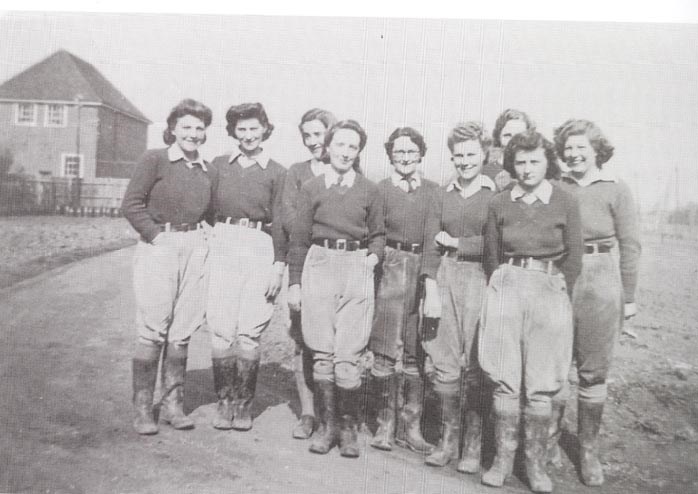
We had a great time for about a week as we helped out in the fields and had fun finding potatoes with the weirdest shapes. I hope, in the end, we were more a help than a hindrance but I would not be too sure if all the farmers thought so.
At the end of that first year I came close to top in the class so for the second year I was to be jumped up into 2A but before that we had another summer holiday to look forward to.
That summer I went down to London again, but this time I was able to stay with my Nan. She had been re-housed, along with Granddad and my two uncles, Henry and George. They moved to a new ‘Pre-fab’ in Hewlett Road, Old Ford, which was not too far from their old home in Poplar. Pre-fab is short for a pre-fabricated house and the government had arranged for a large number of these to be erected on cleared bomb sites and other areas to help re-house many of the people who had been bombed out of their own homes during the war. They were usually single story bungalows but with nice modern facilities like indoor toilets and bathrooms, central heating and fitted kitchens. For many people they were a real luxury home and I know Nan was very pleased to get hers. There was a nice big living room and two bedrooms so it suited Nan very well. Just at the one end of Hewlett Road was Roman Road which was a well-known open market street. At the other end of the street was Old Ford Road and just across a canal was Victoria Park. I had a great visit that summer and made friends with a boy in the same street so we used to go fishing in the canal together or wander over the park. One section of the park had been given over to a large pig farm and we used to love to go there to feed the pigs. All the waste food scraps were collected for them and although there was quite a smell it was not as bad as you might think.
Nan and I would go shopping together and would sometimes go ‘Up West’ to see a show. Up West was the West End as it was called, considered to be the entertainment centre of London. All the big theatres and cinemas were there and some of the famous shopping streets like Oxford Street and Regent Street. You could go to the theatre quite cheaply if you went in ‘The Gods’, which is what we called the upper balcony of the theatre. Most theatres never pre-booked those seats and you could queue up on the night to get in. Some had a clever way of booking your place in the queue. You went to the ticket office in the afternoon and got a small folding stool with a cloakroom ticket. One half of the ticket you pinned to the stool and placed it in the queue in number order. The other half you kept. Then you could go off for the afternoon to do your shopping or go to Lyons Corner House for a posh tea and then you came back about half hour before the performance and took up your place in the queue where your little stool was! We went to some good shows like that; usually musicals and variety shows rather than serious plays.

So back to school in the second year and work was a bit harder in the A-stream, or at least the competition was tougher for I never again got near the top of the class! I think it must have been that autumn that I went with Mum and Dad for a holiday in Scotland.
We drove in Ron’s little Austin Swallow car which was really a two-seater with a dicky seat in the back. We called in to see my Uncle George and Aunt Ruby in Newcastle on the way and were nervous the whole way that the car wouldn’t survive the journey. It would struggle up the hills and then speed down them as if it would not stop!
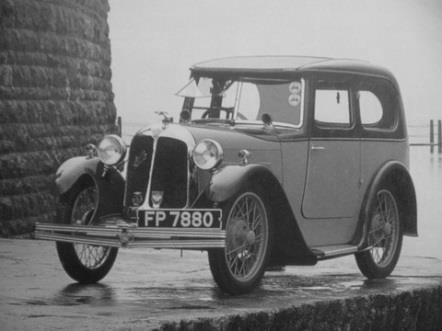
We stayed in Edinburgh and Glasgow and took in variety shows in both cities. In Glasgow we saw Sir Harry Lauder who was one of the great Scottish music hall artists although at the end of his career when we saw him. We finished up at Loch Lomond before heading back home. It was my first trip to Scotland and I little knew that one day I would live and work there!
Towards the end of winter that year I made another trip to Newcastle, this time to see a football match. It was between a team from the English Football League against a team from the Scottish League. Not quite an international match but close to it. It was at St James’ Park where Newcastle United plays today, but in those days it was not all seating or even all covered terraces. I remember we climbed up from behind the terrace and the crowd was thick all over the ground. As a little boy I had no chance to see anything; but no worries. In those days boys were simply hoisted over the heads of the crowd and passed down to the front where we were allowed to sit almost on the touchline. I can clearly remember seeing one of my football heroes, Stanley Matthews, almost in touching distance as he jinked down the wing. I can’t say I remember the result that day but records show it was a 1–1 draw and another great hero, Stan Mortensen, scored for England.
So to the summer of 1948 and Ian Mills was back again visiting us in Yorkshire. We went down to London to stay with Nan and I had a great time showing Ian around MY London. We travelled all over on our all-day tickets and also tracked down an uncle of Ian’s who lived ‘near Kings Cross Station’. That was about the extent of Ian’s knowledge of where the address was so off we set in search of Uncle Freddie Mills. He had the same name as a famous boxer at that time and it turned out that he actually knew him and had various mementoes of his boxing matches. We did track down the address and had a very interesting visit. The highlight of the trip to London was another sporting fixture, however. This time it was cricket and the final test match in the Ashes series with Australia. Although Australia had already won the Ashes by then there was great interest because it was to be the final test appearance of the great Sir Don Bradman. He was regarded as one of the best ever test batsmen so thousands were eager to be at The Oval for that occasion. We went on the first day and as it happened England batted first so we were not likely to see Bradman if things went normally. Luckily for us, but not for English test fans, England were bowled out shortly after lunch for a miserable score. At least it meant we could see all our English heroes at the crease even if they did perform poorly. My particular favourite was Dennis Compton. Not only did he play cricket for Middlesex and England but he also played football for Arsenal, my favourite football team at the time. He was a bit of a pin-up of his day and was famous for appearing everywhere advertising Brylcreem, a very popular hair dressing. He had a brother Leslie who also played cricket for Middlesex and was the regular centre-back for Arsenal and England at football. No wonder they were my heroes!
Anyway back to my story. Australia came in to bat and began piling on the runs with hardly any wickets falling until around tea-time. Finally, before the end of the day’s play Bradman appears to great applause and excitement. Now was our chance to see the great man in action. He was bowled out for a duck on his second ball!! Ah well at least we could say we had been present at an historic occasion. It was his last appearance for Australia since they went on to win by an innings, and he never had the chance to bat in the second innings.
Back to Yorkshire, and the third year at school, still in the A-stream so managing to hold my own academically. By now I was 13½ and was interested in girls although I was shy around them. In the lead up to Christmas we started to have dancing lessons at school, since from the third year up there was to be a school dance for each age group. As beginners we were limited to learning what are called Old Time dances, like The Barn Dance, The Military Two Step and The Veleta. These dances involve learning a set of steps that everyone performs at the same time as they move around the floor in the same direction. They are relatively easy to learn and can be danced without causing havoc on the floor!
Of course you had to partner a girl and that could be embarrassing for teenagers, at least I found it so. At least you did not have to make a choice since the teachers just paired you off. I really enjoyed it and got the bug for dancing. So much so that when the local village hall in Eastrington started lessons for Modern Ballroom dancing Ted Hoggard and I decided to go along.
These dances are a bit trickier because, although you do have certain fixed sequences of steps to learn, you put them together as you wish and move in a less regular pattern. Even trickier is the fact that you have to ask someone to be your partner! Going up to a girl to ask her to dance can be a scary thing and in this case a lot of the girls were a good deal older than us. Although it is not really polite to refuse an invitation, many girls do and often with a real put-down. Mind you it could also be hard for the girls since if they were to sit there and not get an invite they could feel very hurt. If this happened a lot to a girl she would be called a Wallflower, someone who never gets invited to dance.
Nowadays it is less of a problem; partly because a lot of dances are done pretty much jigging around on your own or in a group but also because girls often just dance with each other; something the boys can’t do very easily without raising a lot of eyebrows. Anyway we went to these classes and managed to pluck enough courage to ask girls to dance and really enjoyed ourselves. I have enjoyed dancing ever since but never did feel at ease having to ask someone to dance!
As we got into the winter of 1948/9 Mum was becoming less and less well and was suffering badly with her chest which made her very short of breath. The doctors said she had Emphysema, which is a bit like Asthma, and she needed to get away to a drier and healthier climate. Lee’s Café was not really a good place for her. So Mum and Dad decided they had to look for somewhere else to live. I remember going down to London to look at possible cafés that they might buy, including a Pie & Mash shop, but London was not really very suitable for Mum. In the end they found a cafe in Great Yarmouth on the east coast of Norfolk. This was much healthier, with less dampness and good fresh seaside air, so they plumped for that. It was called Northgate Café and catered for local workmen, especially from the nearby brewery.
So we left Lee’s Transport Cafe but I didn’t go with Mum and Dad to Yarmouth, at least not straight away. It was decided that since I was in the middle of a school year it would be better to stay on to finish the year. Ron was nearly 20 and also still finishing his apprenticeship so it didn’t suit him to move then either. So as Mum and Dad went off to Yarmouth, Ron and I moved into lodgings in Goole. We shared a room in a house and had meals provided. It suited Ron because he was now courting his wife-to-be Sheila, who lived in Goole, and he could get to work easily on the train. I didn’t mind because I also had a girlfriend in Goole and, of course, had lots of school friends around. In particular a boy who was a bit older than me called Roy Wilkinson. I had known him for some time and he had helped me learn to swim. He was a very good swimmer, in fact a school champion, and had given me a lot of confidence. So I finished my last year at Goole G.S. and in the summer of 1949 I moved to Great Yarmouth to start yet another phase of my life in a new home and at a new school.
I lost touch with Ted Hoggard and other friends in Yorkshire with the exception of the Bentleys who remain good friends to this day. They are no longer at the same farm but still live just outside Howden.
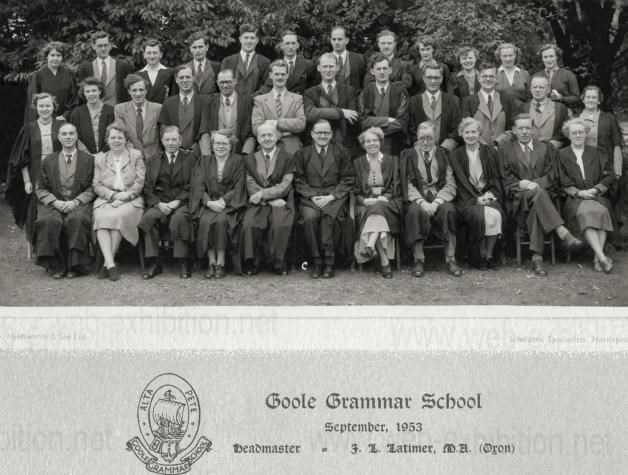
Oh, I Do Like to be Beside the Seaside!
Northgate Café, Great Yarmouth
Not a very impressive place, but at least it was brick built and even if the toilet was still outside it was a flush toilet and not half-way across a field! The cafe was just a large front room really, with a small serving counter. Behind that was a small sitting/dining room for our own use and beyond that the kitchen. Outside in a small enclosed yard were the toilet and a washroom where Dad had installed a bath. Upstairs were two bedrooms and a sitting room. There was an attic but the stairs to it were boarded up so for the time being it was inaccessible, but more of that later. You might wonder how we managed at night with all these toilets in awkward places that we seem to have lived with most of the time. Well if you needed to wee in the night you used the potty, just like babies do. For grown-ups they are called chamber pots but they had various nicknames; Jerry, Po or Gosunder. That last one is a bit comical and it is called that because it ‘goes under’ the bed! Get it? They were widely used in past times, even in smart houses, because indoor flushing toilets were not very common at all. Nowadays you are more likely to see them in antique shops for the china ones are very collectible. But enough of that; on with my story!
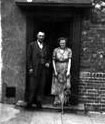
Great Yarmouth is a popular seaside resort on the coast of Norfolk and has a long sandy beach and two piers. It was also an important fishing port, particularly for herring, but is now more used as a port for servicing North Sea gas and oil rigs.
I was to attend Great Yarmouth Grammar School which, unlike Goole, was a boys-only school. The girls had their own High School. I also had to get a new school uniform but since I was now 14 I had moved into long trousers! Before I was to start, however, I had the summer holidays ahead of me.
There was a lot to explore in Yarmouth and I spent some time wandering around the town and the sea-front which had a lot of attractions; amusement arcades, ice-cream parlours, an open-air swimming pool and, of course, the two piers – The Wellington and The Britannia. Despite all these I still wanted to make my usual trip to see Nan in London and so I went down to spend some time with her. This time there was no lorry to get a lift with so it was on the train for me. I also went to see the Covells for, by now, our families were firm friends and visited each other on a regular basis.
Finally I had to face up to my first day at my new school. It was not the same as starting at Goole because then I was one of many starting in the first year, but this time I was a new kid joining the fourth form. In the end it went fairly well and the other boys seemed to accept me quite quickly. As usual it was sport that broke down any barriers and this school played soccer not rugby! We were divided into four houses, depending on where you lived; North, South, West and Central. (There was no East since being right on the coast anyone living east would have to live on a ship!) I was in Central because my home was very close to the town centre and the market place. All our sports and other competitions were run on the basis of teams from each house. I soon made a few friends and in that first year the main ones lived to the north in a village called Caister-on-Sea. I would cycle along the main road past the horse racing track and the Smiths Crisp factory to join these friends to play football. It was at Caister that I learnt to play snooker and billiards. There was a small hall in Caister with just a couple of tables but the man who ran the hall encouraged us teenagers to take up the game and he was happy to coach us. It was a great shelter when the weather was nasty and I found that I had a good eye for the game. I was no Alex Higgins or Jimmy White, however, and never won any tournaments!
Another pastime was going to the Speedway. Yes I was able to start watching a sport that I hadn’t watched since the Hammers at Custom House. Yarmouth had a team, called The Bloaters, but they were not in the top league - I think division 2. I had two heroes, Billy Bales and Johnny Chamberlain. It was good to go along and enjoy the atmosphere of the track once again and it brought back memories of my early days.
I managed well enough at school but I suddenly found myself having more problems with Maths which had been a strong subject at Goole. The problem was that at Yarmouth they had progressed further along the curriculum so that when I arrived they had already done logarithms, for example, and I had never touched them at Goole. I seemed forever to be trying to catch up so I really lost my confidence. In other subjects I was OK most of the time but it did depend on the teachers. Some of them I got along with while others were trickier. As a result I enjoyed Chemistry, English and History but not Physics, Maths and Art.
Something else was new at Yarmouth; they had an Army Cadet Corps and I was encouraged to join by one of my new friends, Johnny Gibbs. We were issued with proper uniforms and once a week was ACF day at school. We did all the usual training like marching and handling a rifle on the parade ground. Eventually we were also allowed on the firing range for target practice with real ammunition! I enjoyed the cadets, even to the extent that I joined a Cadet Company outside school which would meet in the evenings. There were two to choose from; one in Yarmouth and one in neighbouring Gorleston which was the other side of the river. Although it was a bit further to go I plumped for Gorleston since Johnny Gibbs lived over that side and that was where he went.
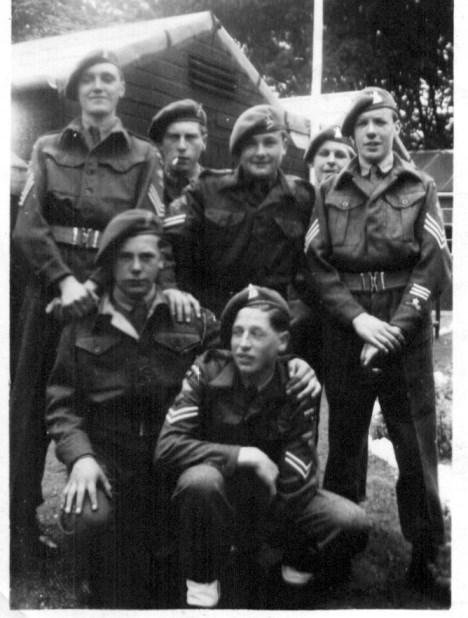
This is with members of the Gorleston Company, not the School. By this time I had become a Corporal so it was certainly after I had been a member for a year or more. I never did make it to Sergeant like Johnny.
Later that first year at school I also took up tennis. Although I had played around with a racket and ball in Yorkshire, hitting the ball against the wall, I never really had the chance or inclination to take it up seriously. In Yarmouth there were lots of good facilities in the park near my house and on the sea-front. Two or three mates at school played so I persuaded Mum and Dad to get me a decent racket and that summer began to play a lot. It was also a good chance to meet the girls from the High School since they used to come down to the park also and, of course, some of the other boys already knew them. As with most games I took to it fairly well but also as usual I did not shine as an outstanding player. My best sport was undoubtedly soccer and for the most part I played either at Right-Half or at Right-Wing. (They don’t talk about positions like that nowadays but then it was a strict formation: Goalkeeper, Right and Left Back, Right, Centre and Left Half, Right Wing, Inside Right, Centre Forward, Inside Left and Left Wing.) In my two positions I guess you could call me the David Beckham of my day - only joking!!!
Since I was a small boy at the Rendezvous I had done small jobs to earn pocket-money and I continued in the same way in Yarmouth. That first summer my Dad was doing some work for a man who ran an amusement stall on Britannia Pier and I also began to help out. I had a real disaster on one occasion. It happened like this. The stall offered prizes for the players, things like dolls, fluffy toys and china ornaments. Well, the owner had ordered some china from a man on the market and I was dispatched with a wheel-barrow to fetch them – a tea chest full. I collected them without any problem but the barrow was a bit delapidated and as I trundled down the road back to the pier the end of the barrow gave way and the tea-chest toppled to the ground with a crash. Some passers-by gave me a hand lifting it back onto the barrow but I feared the worst and was trembling at the thought of reporting it back to the owner. I even thought of abandoning the lot and running off home but I knew I had to face the music. My one consolation was that I knew it was not really my fault but I wasn’t so sure the owner would think the same. Anyway I returned to the pier and confessed the whole incident. He went through the chest and I reckon half the things were broken. To my surprise he took it pretty well and thanked me for being so honest about it all. So you see it is not always as bad as you think it might be and it usually pays to face up to things when they go wrong.
I continued to work for him and was even allowed to work on the stall which was a sort of horse racing game where the customers had to bowl balls into holes to make the horses move along. I’ll let you into a secret here. The owner had a switch under his feet and he could control the horses himself if he needed to. It didn’t stop people winning because there was a winner for every race but he could stop someone winning all the time and he could also make it more exciting by giving a helping hand to the backmarkers! So summer ended and it was back to school in the Fifth form with GCE exams at ‘O’ level at the end of the year. They would decide whether or not you stayed on at school.
School continued much as normal as far as I can recall except for one incident that nearly finished my school career completely. It happened like this. One day in the Art class I was sitting on a stool as we sat around the teacher and realised that my sock had ‘gone to sleep’. (If you don’t know that phrase it means when your sock works its way down and under your heel) So I had slipped my shoe partly off to pull up my sock. As luck would have it Mr Whitehead, the assistant head teacher, walked into the room and saw me at that moment. “What do you mean undressing in class, Bain,” he said, “How would it be if I came into your cafe and started to undress?” Rather cheekily I said “You can come into our cafe in the nude if you like sir.” Well he hit the roof at that and told me to report to the Headmaster for being insolent. I was expecting to get the cane but the Head chose to suspend me from school for the rest of the week. I was told to consider my behaviour and, if I was prepared to apologise to Mr Whitehead, I could return the next week; if not I would be expelled! Well I went home in a right state with a mixture of shame and indignation because I thought the teacher had over-reacted to my sock adjustment but I also realised that I had also over-reacted with my impudence. I spent the next few days in a bit of a turmoil and seriously considered not apologising, but then I realised I would be putting my future at risk so I swallowed my pride and went back to school and apologised to Mr Whitehead. We never did get on very well after that and since he was the Colonel of the cadet corps I think he was partly the reason why I never made it to sergeant!
Outside school I developed other pals and also got a job doing a paper round. This involved getting up early and ready for school, then off on my bike to the paper shop near school. A big bag with all the papers was prepared by the shop-keeper (a bit like the bag postmen carry over their shoulder) with all the papers and magazines in house order with the number written on. I just had to cart the bag round the streets and pop the papers through the letter box or leave them in the doorway. I became good pals with a boy called David Oxborough mainly because we both developed a passion for Subbuteo. This was a table football game where you had to flick the little players with your finger to hit the football. We had to have a special table cover (my first one was made out of an old blanket) which you marked out as a football pitch with chalk. Dave and I would play for hours and we had several different teams because you could buy the players in different colour shirts. It was quite a skilful game.
This is an extract from an advert to show you what the little players were like. They were about 5cms tall and the rounded base meant that they did not fall over and you could make them go around bends by the way you flicked them. A couple of other pals soon joined us so we had a real competition between us with a league table and everything.
So the school year went on and we were getting nearer to the exams which we took in May/June of 1951. I think we were either the first or second year to take the new GCE (General Certificate of Education) exams. I took 9 altogether but only managed to pass 8 of them. I still don’t understand how I failed the English Literature paper! Anyway it was good enough to mean that I could go on to the Sixth Form if I wanted to and, since Mum and Dad were happy for me to continue, that is what I decided to do. That meant that I didn’t have to look for a proper job and could look forward to the summer holidays instead.
Well 1951 was the year of the Festival of Britain and there were all sorts of events in London including the opening of a big development and exhibition hall on the South Bank of the river Thames. So off to London I went to sample what was on offer.
It was amazing with the South Bank dominated by the Festival Hall (still a concert hall) and a contraption called The Skylon. The exhibition was to celebrate the recovery from the war and to show British prowess in all sorts of areas like engineering, science and art. From the South Bank site you could take the water bus along the Thames to Battersea Park where there was a huge Amusement Park. I guess by today’s standards of Alton Towers and such like it would seem pretty tame but I thought it was fantastic.
Back in Yarmouth I took up with another pal called Mike Bullock who was keen on roller skating. At the Wellington Pier there was not only an outdoor roller skating rink but also the Winter Gardens Ballroom and on some afternoons and evenings it was open for indoor skating which meant you could happily skate in the winter without worrying about the weather. When I say Mike was keen on skating it was not just to amble round the floor but dancing on skates. It was a bit like learning the Barn Dance and The Veleta all over again only this time on wheels! Roller skating was very popular and there were roller hockey teams and figure skating just as with ice-skating. As usual I was able to manage basic skills but never managed triple salcos and the like. Nevertheless Mike and I learned some of the basic dances to the point where we were confident enough to ask girls to partner us. But that came a little later.
One of the other attractions of Yarmouth sea-front was the big open air salt water swimming pool. We would keep an eye on the big thermometer that they displayed outside the pool to tell you the temperature of the water and only when we reckoned it was warm enough did we venture in. The school held its swimming gala every year at the end of the summer term and that was the occasion for my one and only sports medal. As I have said I was not a good swimmer but I did enjoy diving, once I had become confident that I could swim well enough to get back to the side of the pool. So since we were encouraged to take part in the Gala I entered for the diving and won a Bronze Medal! I think there were only four or five entrants so it was not such an achievement but I was very proud of that medal and I think I still have it somewhere attached to a watch-chain.
It was also at that time that we investigated that staircase to the attic. It was a spooky opening up the wall and discovering what was up there; perhaps a skeleton! But no it was just a dusty attic room with a small dormer window and a loft area through a door. I fell in love with it and could see it would make an ideal den for me. So with the help of some builders, who were customers in the cafe, we quickly cleaned and decorated the place and I finished up with a great bed-sitting room all to myself.
So it was finally back to school but this time we had to select which subjects to study to prepare for our A-level GCEs. You could either go into the Sixth Form Science or the Sixth Form Arts. Although I had done all right in the sciences and well enough in Maths, despite my earlier problems catching up with logarithms and algebra, I had had some problems with the teachers who would be taking those subjects. So I opted to go into the Arts stream and took English, History and Geography. The English teacher accepted me despite my failure in the O-level GCE (he couldn’t believe I had failed either) and he was a very good teacher. He was Mr Pashley and he had a daughter, Anne, who was a very good athlete. (She eventually competed in the Melbourne Olympics in 1956 as a sprinter and won a silver medal in the sprint relay event. She also had a good voice and I now know that she went on to become an opera singer.)
That winter season I made it into the school soccer team as right wing and I also kept up with the roller dancing. Mike Bullock also persuaded me to go along to the Floral Hall in Gorleston to take up Square Dancing. (Some people who know me now and how I feel about that type of dancing would find that hard to believe!) Square dancing had become a real craze around that time and I even had a check shirt to wear for the occasion! Not satisfied with that, along with a couple of other mates I also took Ballroom Dancing lessons since going to the Saturday night dances was a favourite pastime as well. At that time the big dance bands were still around and apart from the resident bands at the Floral Hall and the Winter Gardens there would be visiting bands like Ted Heath, Ken Mackintosh and Johnny Dankworth.
Come the summer and it was back outdoors for tennis and swimming or just larking around on the beach.
By this time I had to start thinking about what I wanted to do when I started work. One of my friends at school had left earlier and joined the Customs and Excise service and his description of what was involved got me interested. To get into the higher level of the service you had to take an exam but not until you were 21. Anyway it seemed to be an interesting career option and I started to think that that was the way I would go eventually. First I had to do my final year at school and then I had to face my National Service. At that time nearly every man had to do 2 years in one of the armed services- the army, navy or air-force.
As that final year progressed my plans began to set. A boy who had left a couple of years earlier was in the Royal Army Pay Corps and came home on leave. He was already a sergeant which seemed amazing until he explained. Instead of just doing his National Service he had signed up as a regular soldier for 3 years. That had certain advantages; first you were paid more as a regular, second he could choose (within reason) which regiment he wanted to join and finally if you were to leave after 3 years you were allowed some time to study and take exams if you needed extra qualifications. The appeal of the RAPC was that you were trained in the clerical needs of the Pays Corps and if you did well enough you were posted with the rank of sergeant since you needed at least that rank to carry out your job, which was to pay the soldiers at whatever company you were with. All that sounded pretty good to me, since if I could not take my Customs exam until I was 21 I may as well stay with the army for the third year rather than trying to get a job for a year after National Service. If they allowed me time to study for that exam, so much the better.
So that is how my plans for my career took shape but I still had to finish school and much was to happen in that last year.
With the roller skating and dancing I was naturally meeting lots of girls and I started going out with a girl called Brenda that I had met roller dancing. That lasted a few months but was cooling off by around my 18th birthday in February. Then came the great East Coast Floods! I had gone off as usual to the Saturday night dance at Gorleston (which you remember was the other side of the river) and my two mates and I were happily enjoying ourselves. When we came out around midnight to catch the late bus we were told that there weren’t any because the road back was flooded. There was no way to get back to Yarmouth and the phones were down (no mobiles then). Luckily one of my mates had a brother who lived in Gorleston and the three of us were able to go to his house for the night but I could not contact my parents. We still had no idea of the scale of the flood and it was only as the night went on and in the morning that we learned just how serious it had been. The whole of the East Coast from Lincolnshire down to Kent had been affected. In the morning the floods on the road back to Yarmouth had gone down a bit and we were able to get a lift on the back of a lorry through the water and over the bridge to the Yarmouth side of the river. I noticed as we drove along the road that a whole area of housing was still under water and that was where my recent girl-friend Brenda lived. I finally got home late Sunday morning only to be greeted by very angry parents. Where had I been all night? Why hadn’t I telephoned? Don’t you know they were worried? I said I was sorry but there was nothing I could have done, hadn’t they seen the news? Apparently not and they had no idea what had been happening through the night. When I explained they calmed down a bit and turned on the news and I looked forward to my Sunday dinner!
The next day the floods had gone down and I went over the bridge to where Brenda lived. Their house had been a few feet under water and they were trying to clear up the mess. I helped as much as possible but it was going to take a long time for them to get back to normal.
Meantime the winter soccer season was coming to the end of what was one of my school’s best performances. I had established myself as a regular member of the team and when the season finished we had a triumphal photo. Can you spot me? I was awarded my school colours in Soccer, which meant I could wear a special badge on my blazer as having represented the school in that sport. Later in the summer I also earned my colours in Tennis.
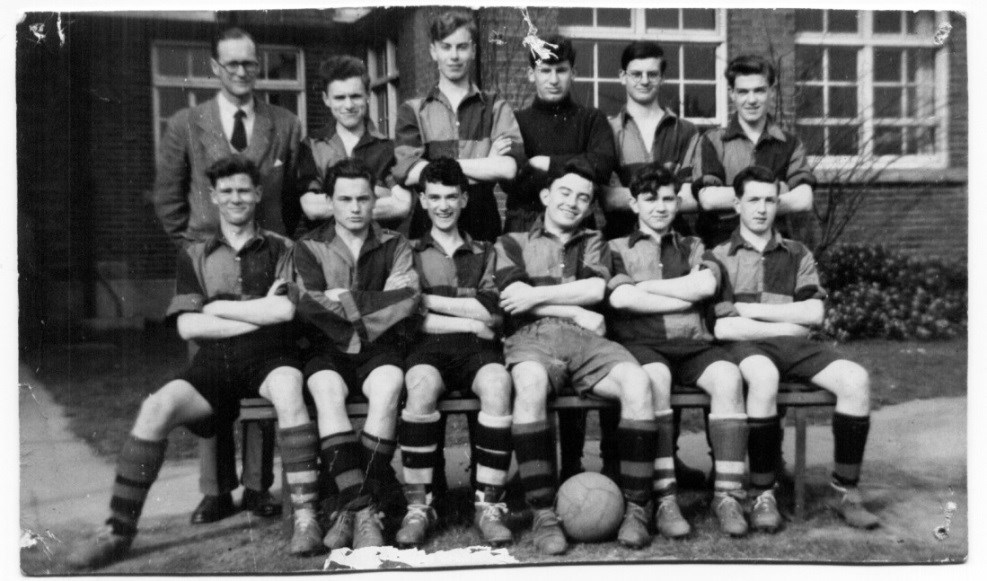
My GCEs were looming but I decided a good way of preparing was to go for a holiday in Keswick. Ian, by now, had done his National Service and had joined the Meteorological Office as a trainee. He was to turn up later that summer in a Met. Office in Norfolk, quite near Yarmouth. I wandered around my old haunts in Keswick and spent some time in the museum studying the geography of the Lake District. It was lucky for me because a big question in my Geography exam when I sat it was on exactly that area!
When I returned it was to some bad news about Mum. She had become very unwell and had to go into hospital for a serious operation. That meant all hands needed for the café if it was to stay open. All my learning about cooking at Mum’s side came in handy and while Dad prepared the food for lunch-time I was up very early baking cakes and pies for the rest of the day. Dot, the girl who helped in the cafe, got stuck in with extra hours and another friend came in to lend a hand. We managed to keep it going but it was not the best background for me to sit my exams. I would do all my cooking first thing and then jump on my bike to dash to school for the morning exam. Dash home to help out at lunch and, if there was another exam, dash back to school. Luckily, with A-levels there were fewer papers to sit so there were odd days when I had no exams. I didn’t do too well in those exams but thank goodness for my stay in Keswick because I am sure that that question helped me pass my Geography!
In all this excitement I had to register for the army and take my medical which I passed with flying colours as far as I knew at the time. As you read right at the start of this story that was not exactly the case but I had no idea I was ill at this time. In fact I was living to the full. Apart from helping at the cafe I still managed to get in plenty of tennis and swimming and was going dancing regularly.
That time was also a momentous period in the country. Queen Elizabeth II had her coronation with much excitement as it was to be the first ever to be televised. Edmund Hilary became the first man to climb Mount Everest and, after many attempts, Gordon Richards won his first Derby. (He was a famous horse racing jockey who had won many races but never The Derby which is considered to be the most important flat race in Britain.)
So by the end of August I was ready to go off to join the army to begin my three years as a regular soldier. I took the train down to London and then on to Devizes in Wiltshire where the Royal Army Pay Corps had its main training camp. I arrived at the camp and was directed to an office where I had to go through various form filling and then was taken to a barracks which was to be my home during the basic army training process. There were two huts allocated to my intake with about 20 beds in each. Other new recruits were there and a few more arrived later and most of them were on their National Service for two years. In charge of our hut was a corporal while the other hut had the sergeant, and they would both be responsible for putting us through our training programme. Before that could begin we had to be issued with all our kit so we were gathered together and marched off to a big warehouse building and went from section to section collecting our uniforms and equipment. Then it was back to the barracks to be told how to look after it, how to clean our boots and brasses, how to make our bed and how to lay out our kit for regular inspection.
Inspection involved placing items of your kit very neatly on the bed in a special order. The bed had to have very neat corners (some of us used cardboard under the blankets to make them neat!) and your boots had to be polished so you could see your reflection in the toecap. When the officer came in we had to be standing at attention beside our beds and hope that everything was to his satisfaction. All this performance was often referred to as Army Bull and a lot of people questioned the necessity for it all.
Only after that did we ever get out to the parade ground where we would be taught how to march, handle our rifles on the parade ground and generally drilled to function as a smart platoon.
When we were not training we would go for our regular meals in the central canteen and in the evenings we had some free time. There was not much to do since we could not leave the camp in those first couple of weeks but there was a NAAFI*. Our NAAFI was OK but part of the problem was that most of us had little money to spend there anyway. At least I was much better placed than most of my group since, as a regular, I was paid almost twice as much as them.
So those first weeks passed with basic training, including being gassed in a special chamber! Tear gas had been used in the war and it was feared that gas would again be used so we had to learn how to cope and how to put on our gas masks quickly under pressure. We were put in a room and told to run around it as gas was pumped in. It soon made us cough and splutter and, true to its name, tears were pouring down. After a few minutes we were ordered to put on the gas masks and I can tell you we did it pretty fast! We also went on the firing range to learn how to fire our rifles but we also learned about Sten guns and Bren guns which were types of machine gun. We had to dismantle and clean them and to reassemble them in double quick time. Most of this came easily to me thanks to my few years in the Army Cadets and I managed pretty well in. And so we came to that fateful day we went to the firing range to practice with the Sten guns and which brings us back to the beginning of my story. I will take up the tale again as I settled down to life in Kelling Sanatorium.
*The Navy, Army and Air Force Institutes (NAAFI) is an organisation created by the British government in 1921 to run recreational establishments needed by the British Armed Forces, and to sell goods to servicemen and their families. It runs clubs, bars, shops, supermarkets, launderettes, restaurants, cafés and other facilities on most British military bases and also canteens on board Royal Navy ships. Commissioned officers are not usually supposed to use the NAAFI clubs and bars, since their messes provide these facilities and their entry, except on official business, is considered to be an intrusion into junior ranks’ private lives. – Wikipedia
Kelling Sanatorium
So we are back with my arrival on a cold December night in Kelling where I was greeted by the nursing staff and taken to my home to be for the next few months. Kelling is spread over a large area set near the heath and surrounded by pine trees. There was a central administration block and several single storey wards. The oldest and original ward was The D’Oyly Carte Wing which was where I was taken. It was a long wooden building built on stilts about a metre high and with a veranda along either side. It was divided into a series of sections each containing two beds facing each other with a locker and wardrobe cupboard alongside. The side walls were like stable doors with a wooden lower part and an upper part with windows. The whole side could be opened up to the fresh air. (Fresh air was considered to be a very important part of the treatment for tuberculosis – TB).
Alongside the wing were a series of wooden huts mounted on turntables that allowed them to be turned round with one side also like a stable door. Some of these had two beds and the others just a single bed. On the other side of the central block were two more wings, The East and The West, but these were brick built at ground level. On the other side was Simpson Wing which was the surgery ward and operating theatre. There were a few other buildings scattered around including the recreation hall. So that was my new home but it would be some time before I could explore the whole place.
My room-mate was a young man much the same age as me who came from Cambridge, I can’t recall his name. The following day I met the doctors and other nurses and especially The Matron who was quite a scary woman. Instead of the medicine I had been given at Hindhead I was put on a new medication which was a new miracle drug called streptomycin. In some ways I think it probably saved my life. I was to stay in bed all day except for being allowed up each morning for ablutions, which meant going to the toilet block to empty your bottle of wee and having a wash and shave. It was called total bed rest. After some time we might be allowed up for 1 hour a day, then two hours and so on until we were allowed up all day and even allowed out of the hospital. That was to be some way ahead for me at this stage.
Doctor Young was the doctor in charge and he was very nice and helpful to me but before that he stuck a big needle into my stomach and pumped me up like a football! You see, part of the treatment was to try to rest the lungs so that they could heal and to help this they pushed air into the space just under the lungs so that they would be supported and compressed. It was very weird to have this big needle, like a bigger version of the type you use to blow up footballs, pushed into my stomach, but the doctor didn’t then get a hand pump and pump away. It was all managed by a very clever piece of equipment. The whole process was called a pneumoperitoneum. Other patients had the air pumped into the side of the chest and this was called an artificial pneumothorax. We just called them a PP or an AP.
Life was pretty boring in those early weeks of bed rest but at least my room-mate was good fun and other patients would call round for a chat, a game of cards or a game of chess. I also continued with my tapestry, leatherwork and other activities. One of these was making artificial paper roses and Mum and Dad, who visited most week-ends, would take them home and sell them for me.
A major event was that I was to be officially de-mobbed from the army. As a regular soldier I was entitled to a full de-mob outfit of suit, shirts, shoes and trilby hat! I was to be interviewed by an officer who would explain my rights and this is where Dr Young proved to be a great help. I was just a young lad of 19 at this time and had no idea about my rights and entitlements but Dr Young advised me that I should be entitled to a pension because, if you remember, I had not been x-rayed when I had my medical and was passed A1 fit when I clearly was not. He told me that the officer was unlikely to tell me about this, but that when he asked me if I wished to apply for a pension on health grounds I was to say yes. He was then likely to ask on what basis I thought I was entitled and I was to reply “On the aggravation of my condition due to the rigours of army basic training sir”. True enough a very snooty Captain came to interview me and told me that I was entitled to apply for a disability pension but since I had only served 4 weeks before being hospitalised it hardly seemed justified. I surprised him by saying I did want to apply and when he asked ‘On what Grounds?’ I trotted out my well-rehearsed phrase. He was a bit taken aback by that but had no option but to note it down. Subsequently my case was heard by the Army Medical Board and I was awarded a pension which I still receive to this day. Thank you Dr Young!
I have to say that I never really felt ill during those months and couldn’t wait to be allowed ‘on hours’. Boredom was a big problem for us patients and we had all sorts of things going on to relieve it. For those up for longer hours there were various activities in the recreation hall including Bingo and the occasional concert or dance. We also had our own radio station which played record requests and passed around messages and any gossip! Patients were also allowed to go outside the hospital and even have a week-end leave to go home.
For those allowed up for just an hour or so we played darts and cards but for the gamblers there was ‘Pitch and Toss’. This is a popular gambling game in some areas but we only played for coppers. It involved pitching a penny at a target on the ground, each player in turn. When everyone had gone you then decided who was nearest, who was next nearest and so on. Then the nearest picked up all the pennies, laid them flat in his palm and then tossed them in the air, calling heads or tails as he did so. He was allowed to keep all those that landed the way he called. Then the next nearest did the same with any pennies left and so on until they had all been won. Obviously the secret of winning was to be able to pitch accurately. One older chap called Danny Gardner, who had been a professional boxer in Norwich and had been around the shady side of life, was a real demon at the game and regularly won the money. He also organised the horse race betting for the patients because he was a ‘runner’ for a Norwich bookmaker (or Bookie, as they were called).
I had better explain a bit of background here. At that time, betting anywhere off the racecourses was illegal but the bookmakers would still take bets around the town under cover. They would employ runners who would go around the various haunts like pubs and clubs taking the bets from the customers. These would be written out on a slip of paper and had to be handed in before the races started. In Kelling it was not possible to take them to the bookie before the race started, so every day Danny would collect the betting slips and money and put them all in a special bag with a time lock on it. So long as the bag was locked before the races started the bookie would accept it. It was collected every day and a replacement left for the next day. The next day any winning bets would be paid out and the process repeated. Danny would be paid a small commission for doing this and would sometimes get a tip from a customer if they had had a good win.
I know all this because when Danny left the Sanatorium I took over his job. So I have to confess to being a bit of a criminal in my youth… Luckily the law never caught up with me. Apart from the money I earned doing this I also had a nice little earner as a paper-boy once again. At the entrance to the hospital was a shop that sold sweets, cigarettes, newspapers, and a few other things for both the patients and for their visitors. Many of the patients had a regular order for their daily paper and I took over the job of delivery boy when the previous person left. I never got out of the habit of earning myself some pocket money!
By the time winter had passed and summer had arrived I was up all day and could get properly dressed and move about.
By this time my room-mate had been moved back to Cambridge and I had a new mate called Pete Ely, from Kings Lynn. We became really good friends and kept in touch for a while after we had both left hospital. We got up to some right mischief and occasionally got caught out. The hospital food was pretty bad and we used to get our parents to bring us goodies, but also things for us to cook like bacon and eggs. Of course we were not supposed to cook but we had a small electric ring stove brought in and hid it in one of the cupboards. When the staff was out of the way we would get out the stove and have a fry-up! We weren’t the only ones up to these tricks and some of the others also had electric heaters because it was so cold. As a result the electric wiring got over-loaded and we had regular fuse failures. Luckily there was always an electrician among the patients and the fuse would be replaced quickly. To avoid it blowing too often they put a stronger fuse in which was totally against safety regulations and could have caused a fire but nobody worried about that! Whenever Matron or the doctors were due to make their rounds everything was hidden away quickly. Well on one occasion, by this time Pete and I had been moved to one of the revolving huts I mentioned earlier, we were having a good fry-up when the doctor decided to do his round. We hastily shoved the stove with the pan still on it into the cupboard but the smell of frying bacon was hard to disguise. The doctor stood at the doorway to our hut and enquired if we were both OK and then, with a smile as he turned to go, he said “Enjoy your breakfast boys! Don’t let Matron catch you.” That was Doctor Salmon who had taken over from Dr Young and he was also to be a great help to me later.
Another mischief we got up to was to go into a neighbouring field that had a potato crop and pull up a few nice new potatoes. They were delicious!
As we were both up all day we were allowed out and would have a trip into Holt or even go to Sheringham or Cromer which were seaside towns a few miles along the coast. The bus stopped right outside the hospital so it was no bother.
I should mention that TB was regarded as a nasty infectious disease in those days and many people were afraid of catching it if you came anywhere near them. It was even called The Plague by some folk. (I can recommend a book called The Plague and I which is about someone with TB in Canada, I think.)
Anyway, on one occasion a few of us went into Holt and decided to go into a pub for a drink. The locals soon sussed out who we were and made a point of moving away from us. Although the landlord didn’t refuse to serve us it became pretty clear that we were not welcome and we soon left with a nasty taste in our mouths that didn’t come from the beer! We often heard of unpleasant experiences like this that other patients had, sometimes during their trip home on leave for the week-end. One friend, a bit older than us from a small village, suffered such an encounter and became very depressed about the prospect of going home. It was very sad because, although TB was contagious, you didn’t catch it just by some casual contact. Luckily I had few such experiences and most of my mates from Yarmouth were loyal and I had quite a few visitors over the months I spent at Kelling and nobody avoided me when I was home.
We had some interesting people as fellow patients, but I remember the excitement when we discovered that a well-known Music Hall performer had been admitted. (I have had trouble recalling his name but I think it was Pat Lennox although my searches have failed to confirm that.) He was no longer active although he did do concerts and such around his local village. He and I became friends because I would spend time with him playing chess. On one occasion he was visited by several glamorous showgirls accompanied by some American airmen from a base near his home. (He had organised shows for the base apparently.) The place was quite a-buzz when this gang arrived and when they left the airmen promised to pay him a surprise visit one day. Sure enough they were true to their word but not in the way we expected. One day, a while after the first visit, a flight of jet fighters, like the Red Arrows, buzzed low over the hospital, did a wide circle and dipped their wings as they passed back overhead; it was his airmen friends paying him a visit!
Next to Kelling was a lovely country mansion called Voewood House, used as a rest home for TB and other patients from the Nottingham area. I believe at the time it was owned by the Miners Union and during the winter it would be occupied by men and in the summer by women. We would occasionally have social functions which we shared, but we young fellows soon got to know the girls during that summer. We would spend some time together going out for walks on the heath or into Sheringham and we had the dances and concerts in our recreation hall. Compared to the luxury of their building our wooden huts came a very poor second.
I fell for a girl called Brenda (yes another Brenda!) and we spent some time together. At this time I was Chairman of the Patients’ Committee so had the privilege of being able to go over to the big house on various pretexts! Among my duties as ‘San Chairman’, as I was called, was to run the radio station every day. Not all day but for an hour morning and afternoon. I would go around the hospital collecting requests for records to be played and any dedications that might be needed. Although there were no lady patients in the main wings there was a special ward in the Simpson Wing for ladies who were having surgery. They could be very cheeky to a young fellow going round collecting requests, I can tell you! I also organised the Bingo and any other events. On a more serious level I was supposed to represent the patients in any complaints to the hospital management. I had two major issues during my time as Chairman. The first concerned food, in particular, the porridge. One or two patients noticed the odd maggot, or what looked like one, in their morning porridge but their moans were ignored. Then a few more complaints arose until most patients were refusing to have porridge at all. I had to take the issue up with the Matron and at first she tried to deny any problem but eventually she was persuaded to inspect the porridge carefully and sure enough it had maggots in it. The stock of porridge oats was then carefully examined and it was crawling with maggots! That was that mystery solved.
The second problem came with the winter weather. We had a very severe bout of snow and, although that wasn’t a problem for most patients, since their way to and from the toilet block was under cover, for those of us scattered around the grounds in the huts it was a major issue. Paths had to be dug through the snow but even then it was hardly suitable to tramp through the snow in slippers. We demanded to be issued with wellingtons. At first this was laughed at, but we made our case which I presented to the management and in the end they agreed and a number of pairs were issued to those who had to wade through the snow. I think it must have been the first and only time the National Health Service had had to buy wellingtons as part of the treatment for their patients.
With winter here and Christmas arriving Pete and I were looking forward to Christmas leave at home, but we still had to complete our treatment. In both our cases this was going to involve surgery since the drug regime had not fully repaired the damage to our lungs. Kelling was a special centre for chest surgery and had an excellent surgeon called Mr Beard. When all else failed in the treatment of TB it was deemed necessary to resort to surgery. This could range from removal of a total lung, to collapsing parts of the lung by removing ribs from the chest wall so that the wall pressed down on the lung. Sounds very gruesome! We were both on the waiting list and as luck would have it our turn came up just before Christmas. Pete chose to ask for a delay until after the holiday but that meant he could be put back way down the waiting list. I wanted to get it over with and get out of Kelling as soon as possible so I went ahead. One of my last tasks as San Chairman, however, was to plead on Pete’s behalf that he should not be penalised by being put at the back of the queue and so, when he returned from leave, he joined me in the surgery wing.
By that time I had had the first of my three operations.
It had been decided that my final treatment was to have the top sections of my right lung collapsed by removing some of my ribs. The number of ribs depended on how much of the lung was to be collapsed, but it was too dangerous to remove too many at one go. In my case two-thirds were to go in three stages – I was to have a 3-stage thoracoplasty to give it the technical name. After each stage we had to recover our strength ready for the next one, two or three weeks later.
I did not enjoy the whole process but, on the whole, we kept pretty cheerful in the ward and enjoyed a lot of banter between us. We had one very sad moment however during this time. Another patient on the ward had had his whole lung removed but seemed to be recovering well. He was from one of the other wings so not a particular friend although I was surprised to discover that I used to dance with his sister at Gorleston Floral Hall! Anyway on one afternoon he said he was feeling uncomfortable and asked me to rearrange his pillows for him. As I was doing this he suddenly started to gasp for breath and I realised something was wrong and went to call the nurse. When she came she immediately called for extra help, the curtains were drawn round his bed, and I was ushered away. A lot of activity went on but then it all went quiet. Sadly he had died. It was a real blow to all of us in the ward and brought home the fact that what we were going through was quite a dangerous process.
After the third and final operation we were faced with the prospect of recovering from the effects of the surgery. We had regular visits from the physiotherapist who pushed hard to carry out certain exercises. These were painful to do since the stitches and the scar left after three operations made it very tender. It was emphasised that unless we did them we would find ourselves permanently bent over to one side. We had seen an older patient back on our wing that was affected like this so we were determined to do our best. Slowly our muscles recovered and after the stitches were removed it became a bit easier.
We were moved out of Simpson wing back to our own wing again but since I was ahead of Pete we did not share a hut. I finished up in a single hut and later moved to a six-man hut called the Sun Shelter. Eventually Pete did join me there for the final weeks of our long stay in Kelling. The patients in the Sun Shelter had fixed up their own dartboard where we had played a lot before our operations. When we tried to play after the op, we got a real surprise. Apart from it hurting a bit as we threw we could hardly reach the board with our darts! The effect of the operation on the muscles on our right side had taken away all our strength. We kept trying and that itself was good exercise so we were able to combine physiotherapy with fun.
By this time I had had my 20th birthday and spring was here again. I couldn’t wait to get out of Kelling and back home. I didn’t have to wait to go through the whole process of getting up one hour a day, then 2 and so on. As soon as I was able I asked the doctor if I could go home. So, only a few weeks after my last operation, I was allowed to leave Kelling.
Before I went, however, I was to have a good talk with Dr Salmon. He asked me what I was now going to do as I was not likely to be accepted into the Customs & Excise Service as I had originally planned. He suggested I tried to get into University but I said that my last school report had said I was not academically inclined and should not consider university! Thankfully Dr Salmon thought otherwise when I told him what my results for my A-levels had been. If you remember I had not done too well but Dr Salmon said he thought they were good enough to try. Not Oxford or Cambridge maybe, but there were plenty of other universities to try. Anyway, he said there was no rush since it would be some months before I was sufficiently recovered to consider work or university. His talk was a great help and more was to come from another quarter from another old acquaintance. On leaving Kelling I was to be referred to the chest clinic in Yarmouth for continued monitoring and when I went there, in charge was none other than Dr Young!
Home at Last
I had been allowed home on the basis that I was to still spend quite a time resting and was certainly not to go cavorting around Yarmouth. It would be another month or so before I could consider work and in the meantime I was to think about my longer term future. I attended the chest clinic for check-ups and Dr Young took up the theme of going to University. He thought it a good idea, especially if I did not go mad and ‘burn the candle at both ends’, as he put it. I still had doubts about being good enough and also worried about financing it all. Again the Doctor helped me along. He reassured me about my being able to manage. Just keep working at a steady rate was his suggestion. Don’t let studies get too behind but at the same time enjoy myself and be sensible about overstretching my resources. As for finance he thought that there was no reason why I should not get a grant from the local Council. (In those days the Local Authorities granted Awards to students with the right grades who could get a place at university. The amount you received depended on parent’s income to some extent but the full award was meant to be sufficient to maintain you through the university term and all fees were paid).
In the end I was persuaded that I should have a go but at that stage I had no idea what to study or where to go. In the meantime I was making a good recovery from my operations and Dr Young thought I would be able to take up light work that summer. Yarmouth was a good place for getting jobs during the summer, being a seaside resort. I looked around and came upon an advert for a position in the office at the Wellington Pier which sounded just up my street. Not heavy work and with the added perks of free entry to all the pier attractions including the ballroom and the theatre which had a resident summer show. I applied and I got the job. It basically involved collecting the cash from the various outlets on the pier and recording them in the ledger. The takings then had to all be totted up and taken to the bank. There was just an office manager and two other clerks working from a small office above the entrance to the pier. It worked out fine and better still, by the end of the summer I was asked if I wanted to stay on. I jumped at the idea for, apart from being a pleasant enough job, the local authority allowed time off for part-time study. One of the other clerks had decided to do book-keeping and accounts as a qualification and had signed up to attend a college in Norwich. I talked this over with Dr Young and he thought it would be very good for me since it would get me back into studying but at a gentle pace. So once a week my colleague and I would catch the train to Norwich and attend classes at a college.
During that summer I took driving lessons and managed to pass my test so I went out and bought an old banger – a 1935 Austin 10. It cost me £65 and although it seemed to go alright it seemed to use almost as much oil as it did petrol! The man who sold it to me let me go round and fill up with old oil for free. At the end of the summer I took a holiday from work and decided to drive up to Keswick to visit the Mills, calling in on my brother Ron on the way back. He was now living in Brough, having finished his National Service in the RAF and married his sweetheart, Sheila. He had gone back to work at Blackburn Aircraft where he had done his apprenticeship.
It was quite an adventurous journey in that old car and, although it got me to Keswick well enough, I had problems when I got to Ron’s. The dynamo gave up and the starter motor jammed. Luckily Ron was pretty good at these things and we went into Hull to find a scrap-yard where we could buy second hand parts. Luckily we found the right spares and Ron fitted them for me and the car made it home. You might wonder how I could afford a car but apart from my wages at work I also had my army pension! I had managed to save quite a bit while in Kelling so it was manageable.
On the way back from Ron’s something happened which was to have an impact on the rest of my life. You remember I have talked about hitch-hiking which was very common in those days. Well, as someone who had taken advantage of lifts myself, I was quite willing to offer the same help to others. So it was that on the way home I stopped to give a lift to a young fellow who was much the same age as me. As we got talking it turned out that he was a student at Leeds University and he was studying Economics. We talked about what that involved and it sounded interesting to me. It was also a subject for which you did not need to have passed Latin at ‘O’ level or above. Many of the better universities required this if you were to study certain Arts subjects like English and History. (Don’t ask me why!) It was the final deciding factor for me and I determined to apply to study Economics.
Outside Oxford and Cambridge, which were out of the question anyway, the two places that appealed to me were London and Leeds (on the recommendation of my student friend). In London, the London School of Economics was the obvious choice but my research showed that University College also had a good reputation and was a more diverse college anyway. An added attraction was that I discovered an old school chum and fellow Soccer team member (Roger Thompson) had just started to study architecture there. So I sent off my applications to LSE, University College, London (UCL) and Leeds. The first reply I received was from UCL asking me to attend for an interview. Off I trotted with a lot of nerves jangling to find UCL and the Economics Department. I found UCL with no problem and walked into the front quadrangle with its famous Portico and steps. (They had become widely recognised as the setting in a popular film made just before I arrived called Doctor in the House.) I then made my way through the college and came out at the rear to an ordinary terraced house, the Economics Department! Very uninspiring! I was shown into a study to meet the senior tutor, Dr Stonier, who was to interview me. He turned out to be very nice and asked lots of questions about my background and he was interested in the circumstances of my taking the A-levels. He was also very sympathetic about my TB. At the end of the interview, and much to my surprise, he offered me a place provided I was prepared to accept and drop my application to LSE. (They were obviously great rivals!) I was so relieved to be offered a place that I accepted on the spot and forgot about Leeds.
My next problem was whether or not I could get a grant but that, too, proved to be easier than I thought. With Mum and Dad not having a high income I was granted the full award and could look forward to starting my new life as a student the following October. That was still some way off and before that I had my 21st birthday to look forward to and the summer in Yarmouth.
I was still working at the pier, of course, and was also finding that I was getting better every week that passed. My exercises after the operation had paid off and although I had a funny curve in my spine, I looked fairly upright and most people would not know I had had 7–8 ribs removed on my right side. I could feel the effects of it though and I was to have problems of one sort or another for the rest of my life. At that time, however, I was just glad to have survived it all. I was able to carry on a fairly normal life and by the time summer ended I had been enjoying most of the things I had always done. The major exception was that I was unable to play sports the same way and that was a big loss. But I had the quieter games like darts and snooker and could still go roller-skating and dancing.
Before the summer ended my old Austin 10 had given up altogether but I fell in love with an Austin 7 Nippy (it was green and black) and so for another £65 it became mine! Another old school friend, Ray Shreeve, had also bought an old Austin 7 saloon and he lived in the Coast Guard station on the sea front. Fortunately there was a large garage with work tools and equipment and that was to be where all our repairs and maintenance was to be carried out.
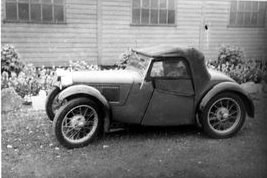
So that summer ended and I was ready to go to the big city and sample life as a student. Dr Young was delighted with both my progress in recovering from the TB and with my success at getting to university. He repeated his advice to me that I should work steadily and play steadily and not burn the candle at both ends. To this day I still appreciate the advice he gave me and the help that both he and Dr Salmon provided in steering me along the way.
So my childhood came to an end and at 21 I was a man with a whole different future ahead of me than the one I envisaged just three years earlier when I stood on that firing range in Devizes.
That is a grown up story and perhaps I will write that story too, one day, but you will need to be grown up to read it!
— Bill Bain, 2015